Trailer air brake faults: why they strand you and how to diagnose them at the roadside
Trailer air brake fault on the M1, A38 or A50? We diagnose and repair at the roadside, 24/7. Serving East Midlands and South Yorkshire from Melbourne, Derby.


A trailer air brake fault will stop your run dead
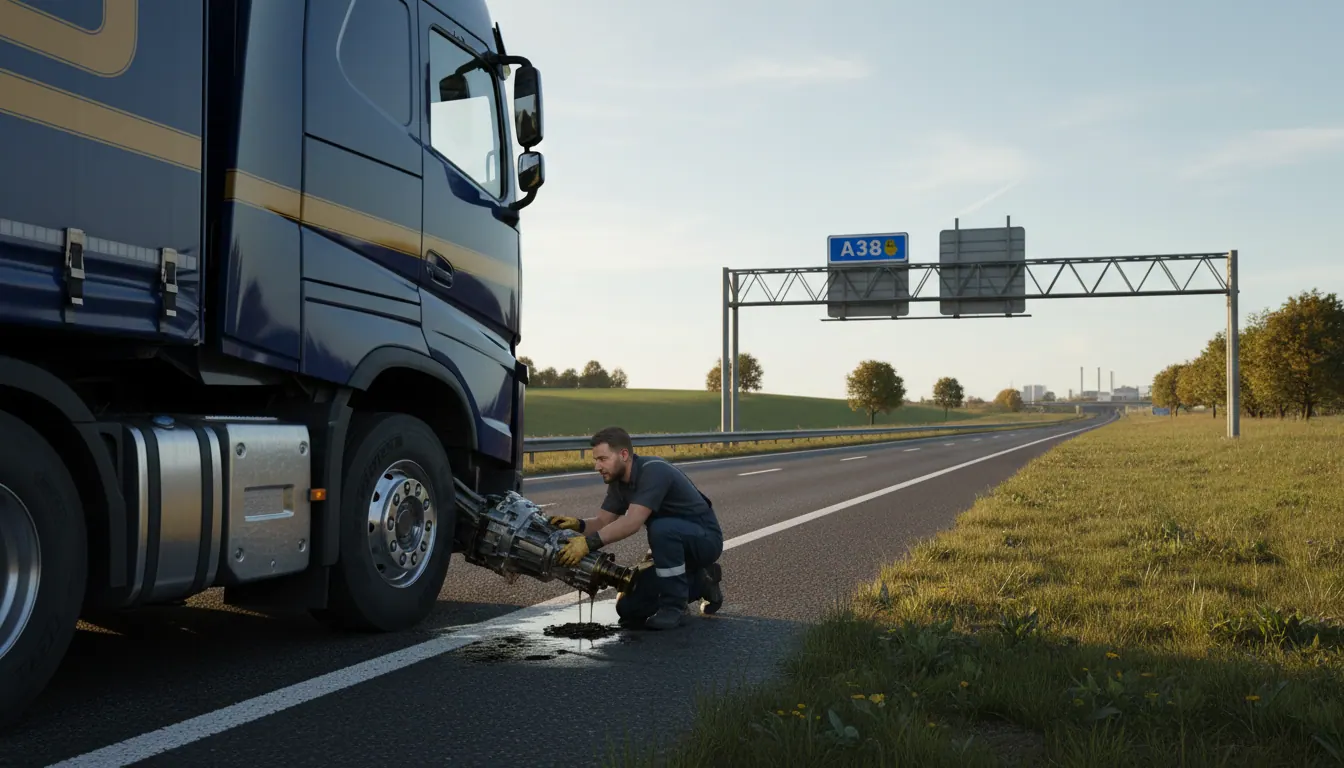
A loaded trailer sitting on the hard shoulder of the M1 near Nottingham or on the A38 south of Derby is not an inconvenience. It is lost revenue, a potential DVSA encounter and a real safety risk to everyone passing at speed. Trailer air brake faults are one of the most common reasons we get called out across East Midlands and South Yorkshire, and they range from a straightforward leaking coupling to a failed ABS modulator that needs proper electronic diagnosis before anything else.
This article covers the main causes, what to look and listen for at the roadside, and when a mobile repair is the right call rather than waiting for a tow.
What actually causes most trailer air brake faults
The air brake system on a modern trailer is robust, but it has a lot of components that all need to be working together. When something fails, the symptoms can look similar even when the root cause is completely different. That is why systematic diagnosis matters.
The most common causes we see on callouts across the M1, A50 and A42 corridors:
- Leaking or damaged air lines and couplings. Gladhand seals perish, coupling heads crack, and airline runs chafe against the chassis. A slow leak will build up over a run and eventually drop system pressure below the threshold that holds the spring brakes off. The trailer locks up and will not move.
- Failed or seized relay valve. The relay valve controls how quickly air reaches the service brake chambers. If it sticks or corrodes internally, you get uneven braking, slow release or a complete loss of service braking on that axle.
- Brake chamber diaphragm failure. When a diaphragm tears, you lose the mechanical connection between air pressure and the push rod. The brake either does not apply or does not release. Either way, it is a roadside repair job.
- ABS modulator fault. On trailers running WABCO, Haldex or Knorr-Bremse ABS, a failed solenoid or modulator valve will trigger an ABS warning and can cause erratic brake behaviour. These need electronic diagnostics to read fault codes before you start replacing parts.
- Low system pressure from a compressor or governor issue on the tractor. Sometimes what looks like a trailer fault is actually the tractor not filling the system fast enough. Checking both sides of the coupling is always the first step.
- Contaminated brake fluid or water ingress. Moisture in the air system freezes in cold weather, particularly on overnight-parked trailers. It blocks valves and causes erratic or total brake failure.
Trailer air brake fault symptoms to recognise at the roadside
Knowing what you are dealing with helps you make the right call quickly.
You hear a continuous hiss from the trailer. That is almost always an air leak. Walk the airline run from the gladhands back along the chassis. Feel for air movement around valve bodies, chambers and line joints.
The trailer brakes will not release. Check the parking brake control first, then check whether the red supply line is delivering pressure. If the spring brakes are applied because of low line pressure, you need to find the leak before you can move.
The ABS warning light stays on. Do not ignore this. A lit ABS warning on a trailer is a reportable defect and DVSA roadside checks specifically look for it. It needs fault codes read with compatible diagnostic equipment, not a visual inspection alone.
Braking feels uneven or the trailer pushes the cab. This points to a relay valve or modulator issue on one axle, or a seized brake chamber. It is dangerous and needs attention before continuing.
The trailer brakes drag after release. A sticking relay valve or a collapsed airline restricting the exhaust port will do this. It causes tyre heat and rapid lining wear, and it will show up on a brake test.
How we approach a trailer air brake fault at the roadside
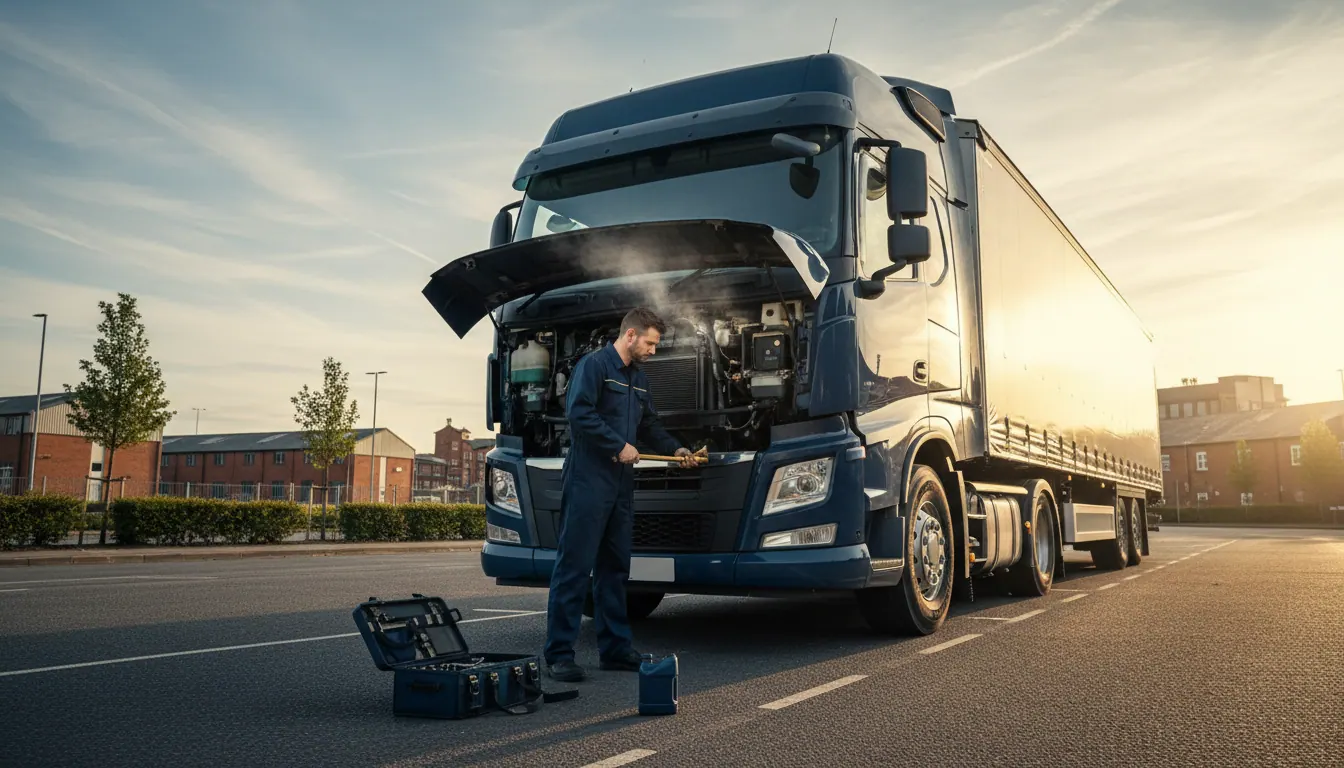
Our technicians attend fully equipped. That means diagnostic tools compatible with WABCO and other major ABS systems, a supply of common valves, diaphragm kits, airline fittings and gladhand seals. Where we can repair at the roadside, we do. Towing a trailer with a brake fault adds cost and delay that most operators cannot afford mid-run.
The process is straightforward:
- Connect to the trailer's diagnostic port and read any stored fault codes.
- Pressure test the system to confirm whether the fault is a leak, a valve issue or an electronic fault.
- Identify the failed component and replace it from the van stock where possible.
- Carry out a brake test to confirm correct operation before the vehicle goes back on the road.
For a deeper look at how air system faults develop and what the diagnostic process involves, our article on HGV air system fault diagnosis: common failures, roadside repair and why they cause downtime covers the wider picture across tractor and trailer.
What one operator said
This review from horizontravelgroup sums up exactly why we work the way we do:
The guys here are brilliant very accommodating no job to big or small, they work fast and to a very high standard as in this business a vehicle of the road is lost money and they understand this.
Highly recommend 👌
That phrase, "a vehicle off the road is lost money," is something every transport manager and owner-driver already knows. It shapes how we prioritise jobs and why we carry the parts we do.
DVSA and operator licence implications of a trailer air brake fault
A trailer with a brake fault is not just a breakdown. It is a potential prohibition notice and a mark against your OCRS score. DVSA enforcement on the M1 and A1 in this region is active, and a defective brake system is one of the most serious categories of roadside check failure.
If you are stopped with a known brake fault, even a minor one, the consequences can include an immediate prohibition that keeps the trailer off the road until a certifying inspection is carried out. Repeated brake-related prohibitions attract targeted follow-up from DVSA.
The practical point: a properly repaired and tested brake system is always cheaper than the alternative. Our brake testing for HGVs and trailers article sets out exactly what DVSA looks for and how brake performance is measured.
Preventing trailer air brake faults: what PMI checks should catch
Most of the faults above are detectable before they cause a breakdown. A thorough PMI safety inspection includes a full check of the air system, brake chambers, relay valves, ABS modulators and airline condition. If your PMI is not catching these, the inspection is not thorough enough.
We carry out PMI safety inspections at our workshop at Calk Mill Farm, Ashby Road, Melbourne, Derby, DE73 8BJ, Monday to Friday 07:30 to 17:00 for planned work. Operators running trailers regularly on the M1, A38 or A50 should have brake chamber condition and airline integrity on the check sheet every time.
Frequently asked questions
What is the most common cause of air brake failure on a trailer?
In our experience, leaking air lines and failed gladhand seals account for a large proportion of callouts. Moisture in the system causing valve blockages, especially in winter, is another frequent cause. Brake chamber diaphragm failure is also common on older trailers that have not had regular PMI checks.
How do I troubleshoot a trailer air brake problem at the roadside?
Start with a visual and audible check for air leaks along the full airline run. Check that the supply and service lines are properly coupled and delivering pressure. If the spring brakes are applied and will not release, the system has lost pressure somewhere. If the ABS warning light is on, you need diagnostic equipment to read the fault codes. Do not attempt to bypass or disable any brake system component to get moving.
How do I reset the trailer brake system after a fault?
There is no universal reset procedure. On systems with an electronic brake module, clearing a fault code with a diagnostic tool may extinguish the warning light, but if the underlying fault is still present the code will return. The fault needs to be repaired, not cleared. For spring brake release issues caused by low pressure, restoring correct system pressure is the fix, not a reset.
How do I fix a trailer brake module fault?
A brake module fault, such as a WABCO EBS or ABS controller fault, requires reading the specific fault code first. Common causes include failed solenoid valves in the modulator, wheel speed sensor faults or wiring damage. Replacing the modulator or sensor is straightforward once the correct fault has been identified. Guessing without reading the codes wastes time and parts.
Call us when you need us
If you have a trailer air brake fault on the M1, A38, A50, A42, A52 or anywhere across East Midlands and South Yorkshire, our emergency line is answered 24 hours a day, every day of the year. We will get a technician to you with the right equipment to diagnose and repair at the roadside wherever possible.
Call us on 01332 916028 and we will get you moving.
“Pulled in by a wrecker with a knackered clutch on my daf about 1130. The lads were on the job as soon as the part came in and had in finished and back on the road by 1715. Cracking job only wish you could give more than 5* Thanks Nick, Kaleb and Ben for getting me sorted and back on the road the sam…”