Coolant system faults on HGVs and trailers: overheating diagnosis, summer checks and roadside repair options
HGV coolant system overheating fault? We diagnose and repair at the roadside across East Midlands and South Yorkshire. Call us 24/7 on 01332 916028.


What an HGV coolant system overheating fault actually means on the road
A temperature gauge climbing into the red is one of those moments that demands an immediate decision. Keep going and risk a blown head gasket or a cracked block. Pull over and lose the run. Neither option feels good, but one of them is recoverable and the other might write off an engine.
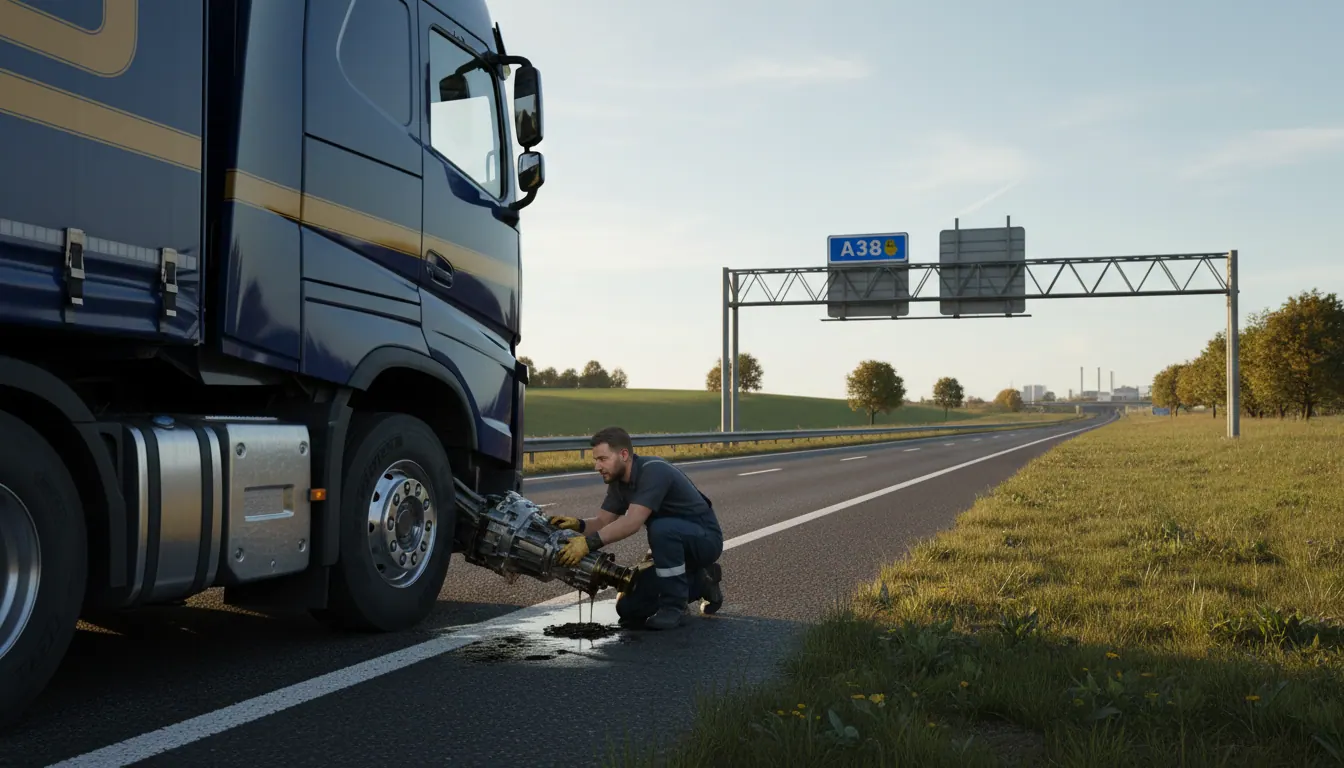
Coolant system faults on HGVs are not rare. They happen on the M1 south of Nottingham, on the A38 through Burton, on the A50 heading towards Stoke. They happen in the middle of a timed delivery window and they happen at 03:00 when there is nobody around. That is precisely why we run our emergency breakdown line around the clock, every day of the year.
Understanding what has gone wrong, and doing it quickly at the roadside, is what separates a two-hour fix from a full recovery and days in a workshop queue.
The most common causes of coolant overheating on trucks and trailers
Not every overheating fault is the same. When our technicians attend a vehicle, they are already working through a mental checklist before they open the bonnet.
Coolant loss and leaks
The most straightforward cause. A split hose, a weeping radiator, a failed coolant cap or a leaking water pump will all cause the system to run low. Low coolant means less heat transfer, which means temperatures rise fast under load. On a long motorway run, especially a loaded trailer on a warm day, this can happen quicker than a driver expects.
Thermostat failure
A stuck-closed thermostat prevents coolant from circulating through the radiator at all. The engine heats up rapidly. A stuck-open thermostat causes the opposite problem, running too cool, which is less dramatic but causes its own issues with fuel efficiency and emissions. On modern trucks, a faulty thermostat will often trigger a fault code before the temperature gauge moves significantly.
Water pump failure
The water pump drives coolant around the system. If the impeller is worn, the shaft seal is leaking or the pump has seized, circulation drops or stops entirely. This is a common failure point on high-mileage units and one we see regularly across the fleets operating on the A52 and M1 corridor.
Blocked or damaged radiator
Road debris, insects and general grime can restrict airflow through the radiator over time. On vehicles running the A38 and A50 routes through industrial areas, contamination builds up faster than drivers realise. A partially blocked radiator might only reveal itself on a hot day or under heavy load on a long gradient.
Air locks in the system
After any cooling system work, air trapped in the circuit will cause localised hot spots and erratic temperature readings. This is a diagnostic point that catches out technicians who are not familiar with commercial vehicle cooling system layouts.
Head gasket failure
This is the outcome you want to avoid by catching the fault early. Combustion gases entering the coolant circuit cause the system to pressurise, push fluid out and overheat repeatedly. A head gasket failure on an HGV engine is a serious repair. Catching the upstream fault, the low coolant, the thermostat, the water pump, before it gets to this stage is exactly what roadside diagnosis is for.
What our technicians do at the roadside
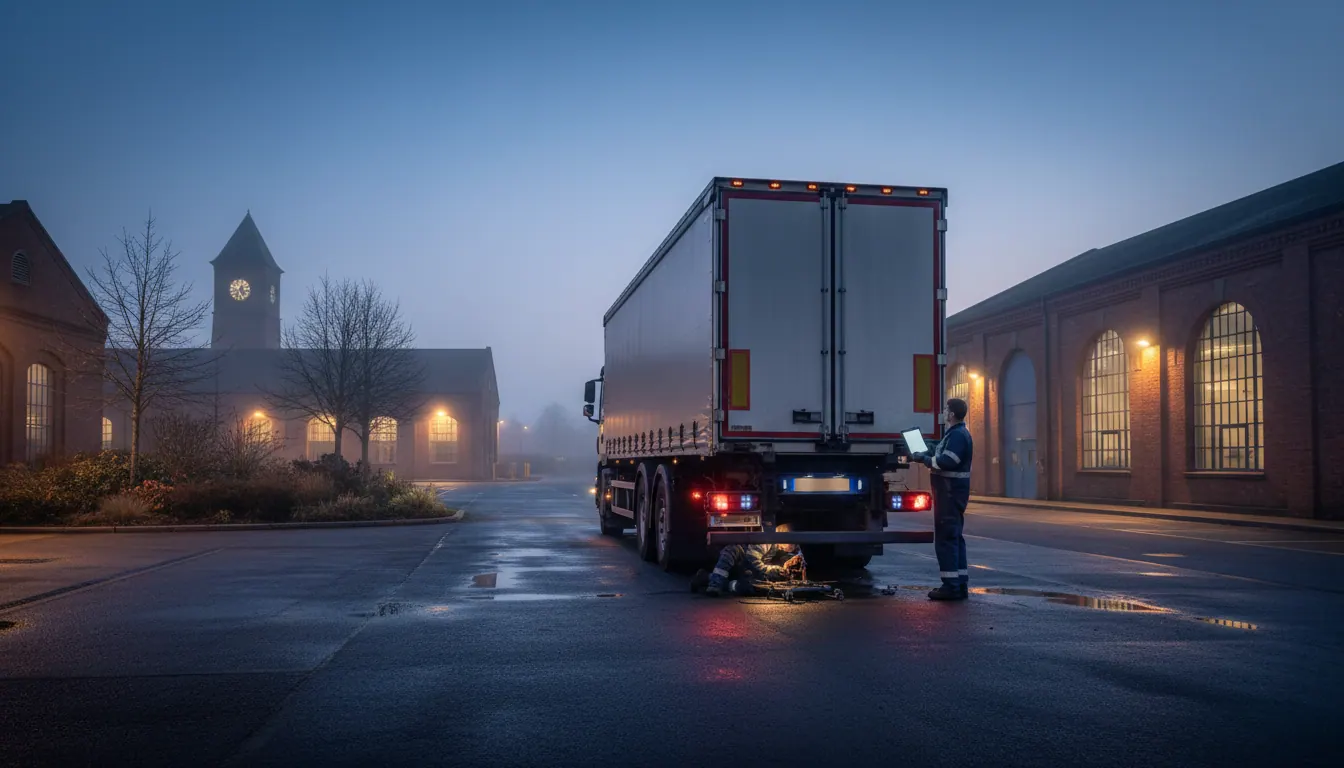
When you call us on 01332 916028, the first thing we do is take a clear description of what the vehicle is doing. Temperature gauge behaviour, any warning lights, whether there is steam, a smell of coolant or a visible leak. That information shapes what our technician brings and what they check first.
Our vehicles attend fully equipped. We carry coolant, hoses, thermostats, water pump components and diagnostic equipment capable of reading live data from the engine management system. For many coolant faults, the repair happens at the roadside, the vehicle is refilled and pressure-tested, and the driver is back on route.
For anything more involved, such as a suspected head gasket or a pump that requires significant disassembly, we will be honest about what can be done safely at the roadside versus what needs workshop time. Our workshop at Calk Mill Farm, Ashby Road, Melbourne, Derby, DE73 8BJ is available for planned work Monday to Friday, 07:30 to 17:00.
The goal is always the same: get the vehicle moving again as quickly as possible, without cutting corners on the repair.
What happens if the vehicle cannot be repaired at the roadside
Sometimes a coolant fault is a symptom of something bigger. If we attend and find evidence of head gasket failure, a cracked block or damage that makes roadside repair unsafe, we will tell you straight and arrange recovery to our workshop.
We carry out full diagnostics before any major work begins. That means no guesswork, no replacing parts on spec and no unnecessary delays while we wait for a diagnosis. If you want to understand more about how electrical faults and warning lights interact with engine management during a breakdown, our article on cab and cargo area electrical faults on HGVs covers the diagnostic side in detail.
Preventing coolant overheating through planned maintenance
Most coolant system failures are preventable. Not all of them, but most. The vehicles that end up stranded on the hard shoulder of the M1 near Sheffield or pulled over on the A42 heading into the East Midlands are, more often than not, vehicles whose cooling system has not been looked at properly in months.
A planned preventative maintenance schedule should include:
- Coolant concentration and condition checks (antifreeze protection and inhibitor levels)
- Pressure testing the system to find slow leaks before they become fast ones
- Inspection of all hoses, clips and the expansion tank for signs of deterioration
- Thermostat function check
- Water pump inspection for shaft play, seal weeping and impeller condition
- Radiator core inspection and cleaning
These are not complex tasks. They take time and they require someone who knows what they are looking at. Fitted into a regular PMI or service interval, they add very little time to the overall inspection. Ignored, they can turn a routine check into an engine-off recovery job.
We offer fleet maintenance contracts for operators across East Midlands and South Yorkshire who want this level of oversight built into a regular schedule rather than left to chance. If you are weighing up whether a contract arrangement makes sense for your operation, our article on fleet maintenance contract vs. pay-as-you-go repairs sets out the practical differences clearly.
What our customers say
The guys here are brilliant very accommodating no job to big or small, they work fast and to a very high standard as in this business a vehicle of the road is lost money and they understand this.
Highly recommend 👌
This is from horizontravelgroup, and it captures something we genuinely believe: a vehicle off the road is a problem that needs solving today, not next week. That understanding shapes how we respond, how we equip our technicians and how we approach every callout, whether it is a coolant leak on the A50 or a more complex fault at a depot in South Yorkshire.
Frequently asked questions
Can an HGV coolant system overheating fault be repaired at the roadside?
In many cases, yes. Hose failures, thermostat replacements, water pump issues and coolant loss can often be addressed at the roadside if the fault is caught before serious engine damage occurs. Our technicians attend with parts and equipment to cover the most common failures. Where the fault points to something deeper, such as a head gasket, we will advise on the safest course of action and arrange recovery if needed.
What warning signs should a driver watch for before the temperature gauge goes into the red?
Watch for a temperature gauge that climbs higher than normal on a long run, a sweet smell inside the cab, steam or vapour from under the bonnet, coolant warning lights or any drop in heater output. Any of these should prompt the driver to pull over safely and call for assistance rather than continuing. Catching a coolant fault early can be the difference between a roadside repair and a major engine rebuild.
Do you cover HGV coolant and overheating faults across South Yorkshire as well as Derby and the East Midlands?
Yes. We cover East Midlands and South Yorkshire, including the M1, A38, A50, A42 and A52 corridors. Our emergency line is answered 24 hours a day, 365 days a year. Location and time of day do not affect our ability to respond.
How do coolant system checks fit into a PMI safety inspection?
A PMI inspection covers the cooling system as part of the engine and fluid checks. Low coolant, contaminated fluid, leaking hoses or a weeping water pump are all items that can generate a defect on a DVSA inspection. Keeping the cooling system in good order is not just about avoiding breakdowns; it is part of maintaining roadworthiness and protecting your operator licence. Our PMI safety inspection checklist article covers what inspectors look for in detail.
Get in touch
If your vehicle has a coolant system fault right now, or if you want to talk through a maintenance schedule that keeps your fleet moving, call us on 01332 916028. The line is answered 24 hours a day. We quote each job individually once we understand what is needed, so get in touch and we will talk through the options.