Gearbox oil and transmission faults on HGVs: spotting warning signs before you're stranded on the A38
HGV gearbox and transmission fault diagnosis for East Midlands and South Yorkshire fleets. Mobile repair and recovery on M1, A38, A50, A42 and A52. Call 01332 916028.
When the gearbox starts misbehaving, the clock is already ticking
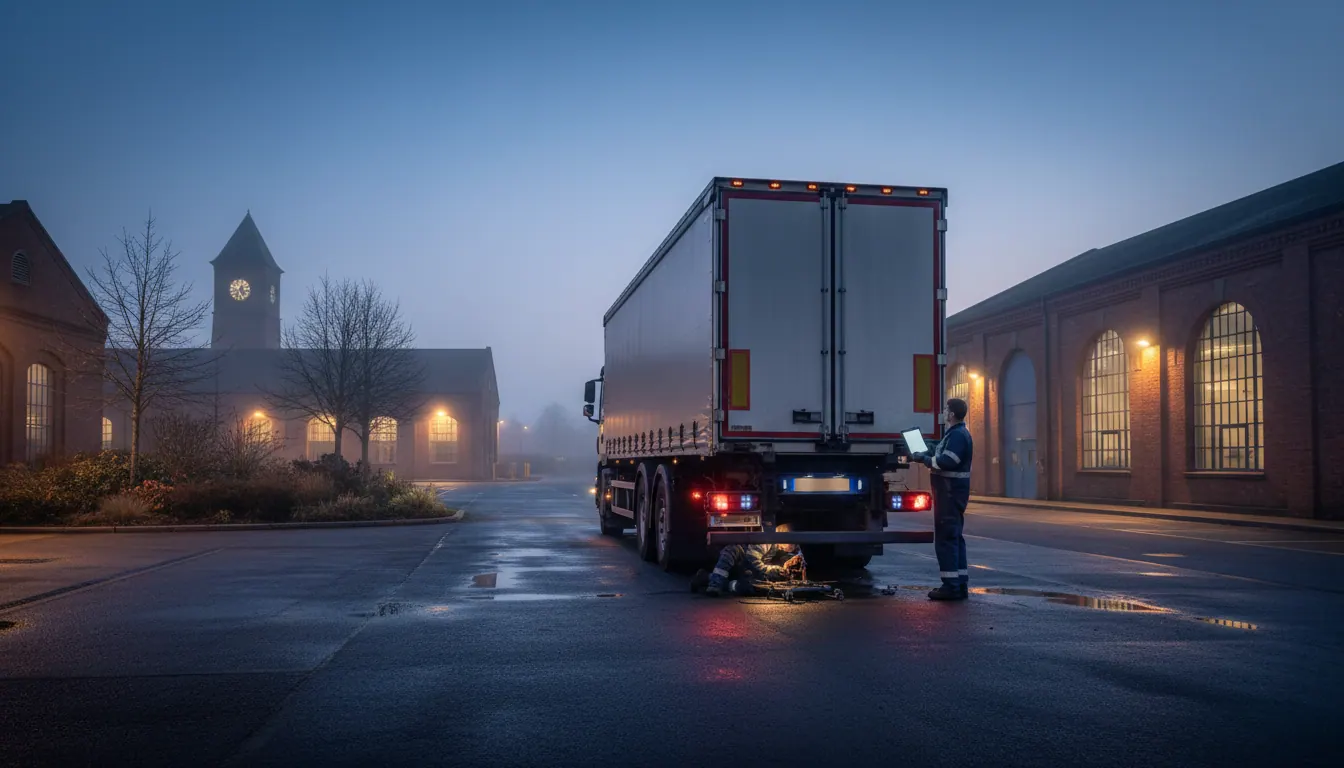
A transmission fault on a loaded HGV is not a problem you can park and ignore. Whether it shows up as a warning light on the dash, a gear selection that won't engage, or a slipping sensation under load on the A50, the fault will not resolve itself. Left undiagnosed, a minor issue becomes a stranded vehicle, a missed delivery window and a potential roadworthiness concern if the fault touches your braking or driveline.
We see gearbox and transmission faults across the full range of vehicles working the East Midlands and South Yorkshire corridor: trunkers on the M1, multi-drop vans on the A52 into Nottingham, tippers running the A38 through Burton, and distribution units loaded out of East Midlands Gateway. The fault patterns vary, but the diagnostic process is the same. Get the right information quickly, repair at the roadside wherever possible, and keep the vehicle earning.
What drivers and transport managers actually notice first
Gearbox faults rarely announce themselves cleanly. More often, the first sign is something subtle that gets dismissed for a shift or two before it becomes undeniable.
Common early indicators include:
- Difficulty selecting a gear, particularly first or reverse
- Clutch engagement feeling higher or lower than normal (on manual boxes)
- The automated manual transmission (AMT) hesitating or refusing to shift under load
- A gear transmission error message on the instrument cluster
- The gearbox warning light illuminating, sometimes with a limp-home restriction
- Unusual noise during gear changes, particularly a grinding or clunking
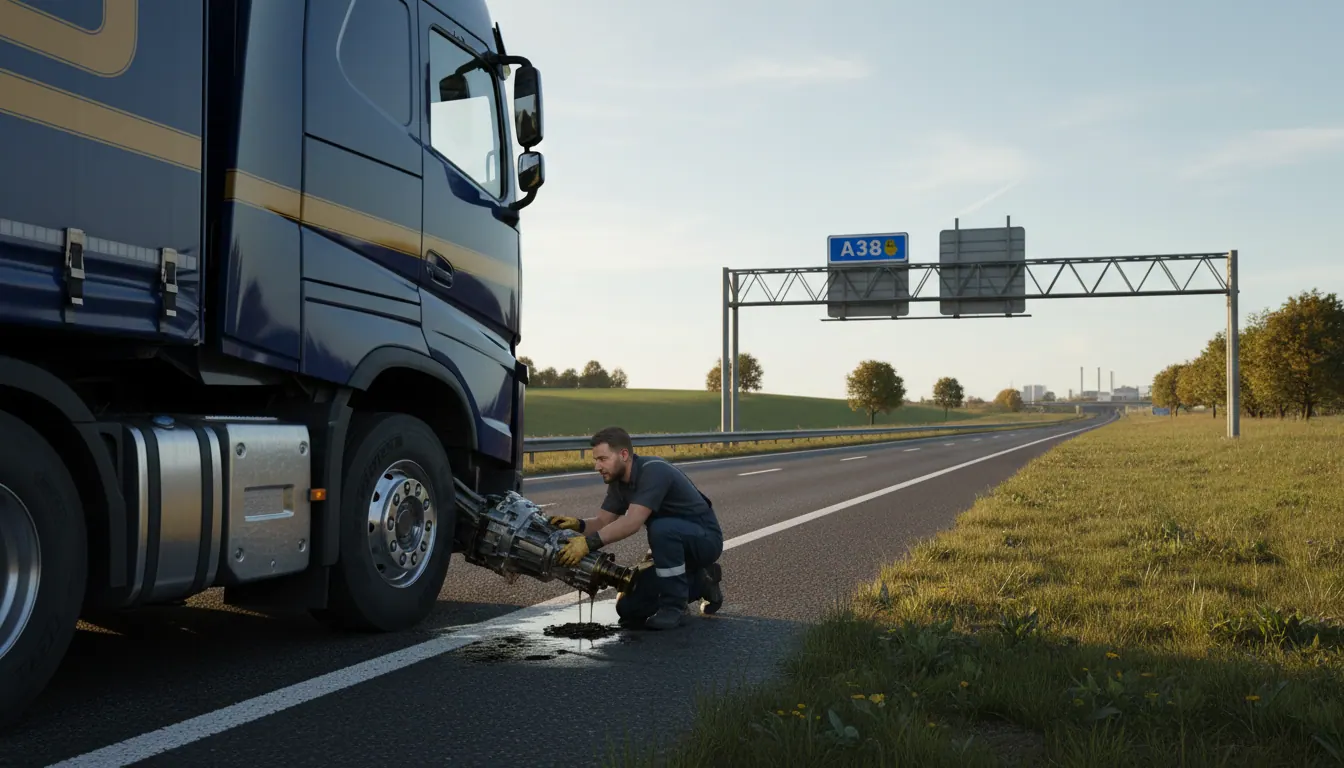
- Oil leaking from the gearbox casing, often visible after an overnight park
The challenge with modern HGVs is that many of these symptoms are shared between the gearbox itself, the clutch actuator, the gear selector solenoids, the air supply to the transmission, or the ECU that controls the whole system. A warning light does not tell you which component has failed. That is where proper diagnosis matters.
What a gearbox warning light actually means on an HGV
Transport managers sometimes ask us whether a gearbox warning light means the vehicle is immediately unroadworthy. The short answer: it depends entirely on the fault code.
Modern trucks from Volvo, DAF, Mercedes, MAN, Scania and Renault all use CAN-bus systems where the transmission control unit logs fault codes that are specific to the failure mode. A warning light could mean anything from a sensor that has drifted out of range, to a solenoid that is not responding, to a clutch actuator that is losing pressure, to a mechanical failure inside the box.
Without connecting a diagnostic tool and reading the live data, you are guessing. And guessing on a commercial vehicle that needs to pass its next PMI safety inspection is not a risk worth taking.
When our technicians attend a gearbox fault, the first step is always to read the stored and active fault codes, then check live data to see what the transmission control unit is actually seeing in real time. That tells us whether the fault is electrical, pneumatic or mechanical, and what the correct repair path is.
The most common HGV transmission faults we diagnose
Automated manual transmission (AMT) faults. Most modern trunkers and distribution HGVs run an AMT rather than a traditional manual box. The mechanical internals are similar to a manual, but the clutch and gear selection are controlled by actuators and solenoids. When a solenoid sticks or an actuator loses pressure, the box may refuse to shift, lock into a single gear, or throw a gear transmission error. These faults are often repairable at the roadside once the faulty component is identified.
Clutch actuator failure. On AMT systems, the clutch actuator does the work a driver's foot used to do. If the actuator loses hydraulic or pneumatic pressure, the gearbox cannot disengage the clutch to change gear. The vehicle may move off but refuse to shift, or may not move at all. This is a relatively common roadside repair.
Gear selector solenoid faults. Solenoids control which gear is engaged. A faulty solenoid may cause the box to skip a ratio, refuse a specific gear, or produce a gear transmission error code. Again, diagnosis narrows this down quickly.
Oil contamination or low oil level. A gearbox running low on oil or with contaminated oil will produce heat, noise and eventually gear selection problems. This is often a maintenance issue rather than a component failure, and it is preventable with proper planned preventative maintenance intervals.
Mechanical internal damage. Synchromesh wear, bearing failure or gear tooth damage are harder to repair at the roadside and may require the vehicle to come into our workshop at Calk Mill Farm, Ashby Road, Melbourne, Derby, DE73 8BJ. Our technicians will tell you honestly at the roadside whether a repair is viable there and then, or whether the vehicle needs to come in.
Air supply and the transmission: a fault that gets missed
One fault pattern we see regularly, particularly in winter on the M1 and A38 corridor, is an AMT that behaves erratically because of a problem with the air supply rather than the gearbox itself. Many HGV transmissions rely on clean, dry, regulated air to operate actuators and shift mechanisms. If there is a leak in the air system, contaminated air, or a failed air dryer, the gearbox may throw fault codes and refuse to operate correctly even though the transmission itself is fine.
This is why proper diagnosis matters so much. A driver who assumes the gearbox is failing may be looking at an air system repair that takes an hour at the roadside. Our article on HGV air system fault diagnosis covers this in more detail, including how air faults present and how we approach them.
How we diagnose transmission faults at the roadside
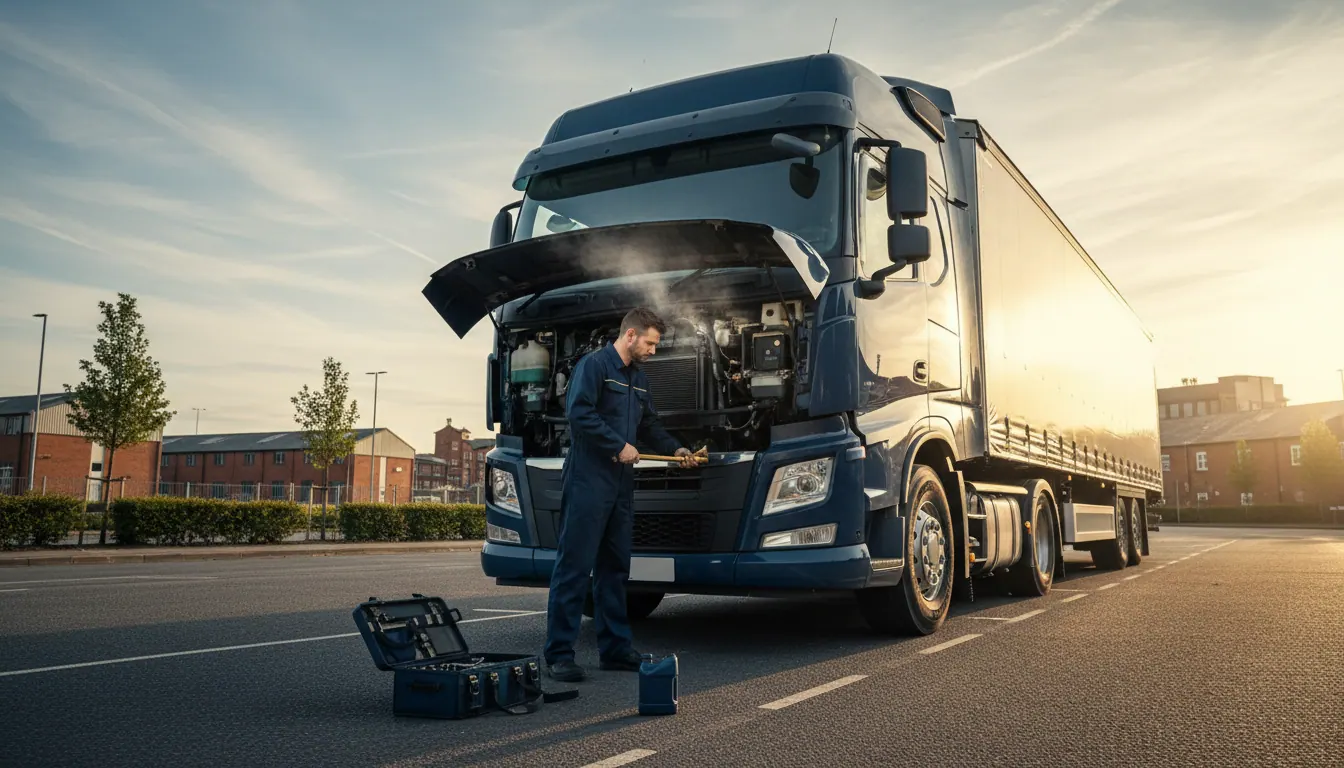
When a vehicle goes down on the A50, the A42 or anywhere across East Midlands and South Yorkshire, our technicians attend with full diagnostic equipment on board. The process is systematic:
- Connect to the vehicle's diagnostic system and read all fault codes across the transmission control unit, engine ECU and any related modules.
- Check live data: clutch position, gear selector position, solenoid response, actuator pressure, oil temperature.
- Carry out a visual inspection: oil leaks, air line condition, wiring harness condition around the gearbox.
- Cross-reference the fault codes with the live data to confirm whether the fault is active, intermittent or historical.
- Where the fault points to a replaceable component, repair at the roadside if the part is available and conditions allow.
- Where the fault requires workshop attention, we recover the vehicle to our Melbourne workshop.
The aim is always to repair on-site and keep the vehicle moving. Towing is a last resort, not a first response.
What our customers say
The review below is from a fleet operator who understands exactly what downtime costs.
The guys here are brilliant very accommodating no job to big or small, they work fast and to a very high standard as in this business a vehicle of the road is lost money and they understand this.
Highly recommend 👌
Reviewed by horizontravelgroup
That last point, understanding that a vehicle off the road is lost money, is exactly how we approach every callout. Gearbox faults do not wait for business hours, and neither do we. Our breakdown line is answered 24 hours a day, 365 days a year on 01332 916028.
Keeping gearbox faults off your OCRS record
A gearbox fault that results in a roadside prohibition, or that shows up as a defect during a DVSA encounter, contributes to your Operator Compliance Risk Score. Repeat prohibitions affect your operator licence. This is not a remote risk for fleets running high mileage on the M1 and A38 trunk routes; these are exactly the roads where DVSA enforcement units operate.
The best defence is a maintenance regime that catches developing faults before they become failures. Regular oil checks, AMT clutch wear monitoring, and proper PMI safety inspections all reduce the probability of a gearbox fault becoming a roadside incident. Our planned preventative maintenance for HGV fleets article explains how a structured schedule protects both your vehicles and your operator licence.
Frequently asked questions
What does the automatic gearbox warning light mean on an HGV? It means the transmission control unit has detected a fault and logged one or more fault codes. The warning light alone does not tell you what has failed. You need a diagnostic tool connected to read the specific codes and live data before you can identify the cause. Do not assume the worst and do not ignore it. Get it diagnosed promptly.
What is a gear transmission error on a truck? A gear transmission error is a fault message generated by the transmission ECU when it cannot complete a gear change as commanded. Common causes include a faulty solenoid, a clutch actuator issue, an air supply problem, or a sensor that is out of range. It is a diagnostic starting point, not a diagnosis in itself.
How do you diagnose what is wrong with an HGV gearbox? Proper diagnosis starts with reading fault codes from the transmission control unit, then checking live data to see what the system is actually experiencing. A visual inspection follows: oil level and condition, air lines, wiring. The combination of fault codes, live data and visual inspection usually points clearly to the failed component. Guessing without data wastes time and risks misdiagnosis.
Can an HGV gearbox fault be repaired at the roadside? Many can. Solenoid replacements, actuator repairs, air supply faults and sensor replacements are all within scope for a well-equipped mobile technician. Mechanical internal damage, such as synchromesh or bearing failure, generally requires workshop attention. We always aim to repair on-site first and will tell you straight whether a roadside repair is viable.
Get in touch
If your vehicle has a gearbox warning light, a gear selection problem, or a fault code you cannot clear, call us on 01332 916028. Our breakdown line runs 24 hours a day, every day of the year. For planned diagnostic work, our workshop at Calk Mill Farm, Ashby Road, Melbourne, Derby, DE73 8BJ is open Monday to Friday, 07:30 to 17:00. Tell us where the vehicle is and what it is doing, and we will take it from there.