Brake testing for HGVs and trailers: DVSA standards and roadside checks on the A38
DVSA HGV brake testing explained for East Midlands and South Yorkshire fleets. Roller tests, laden requirements, PMI compliance. Call Trucktec Assist 24 on 01332 916028.

HGV brake testing and DVSA compliance: what every East Midlands operator needs to get right
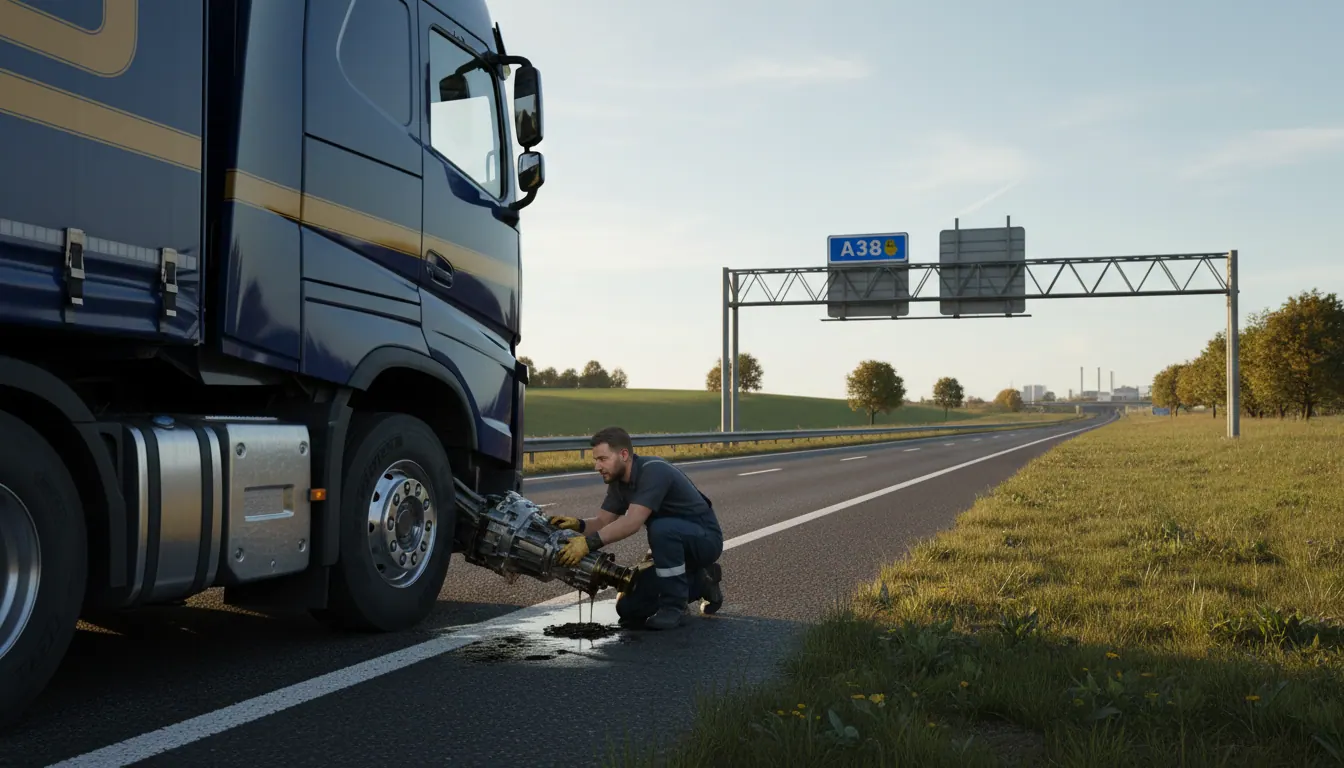
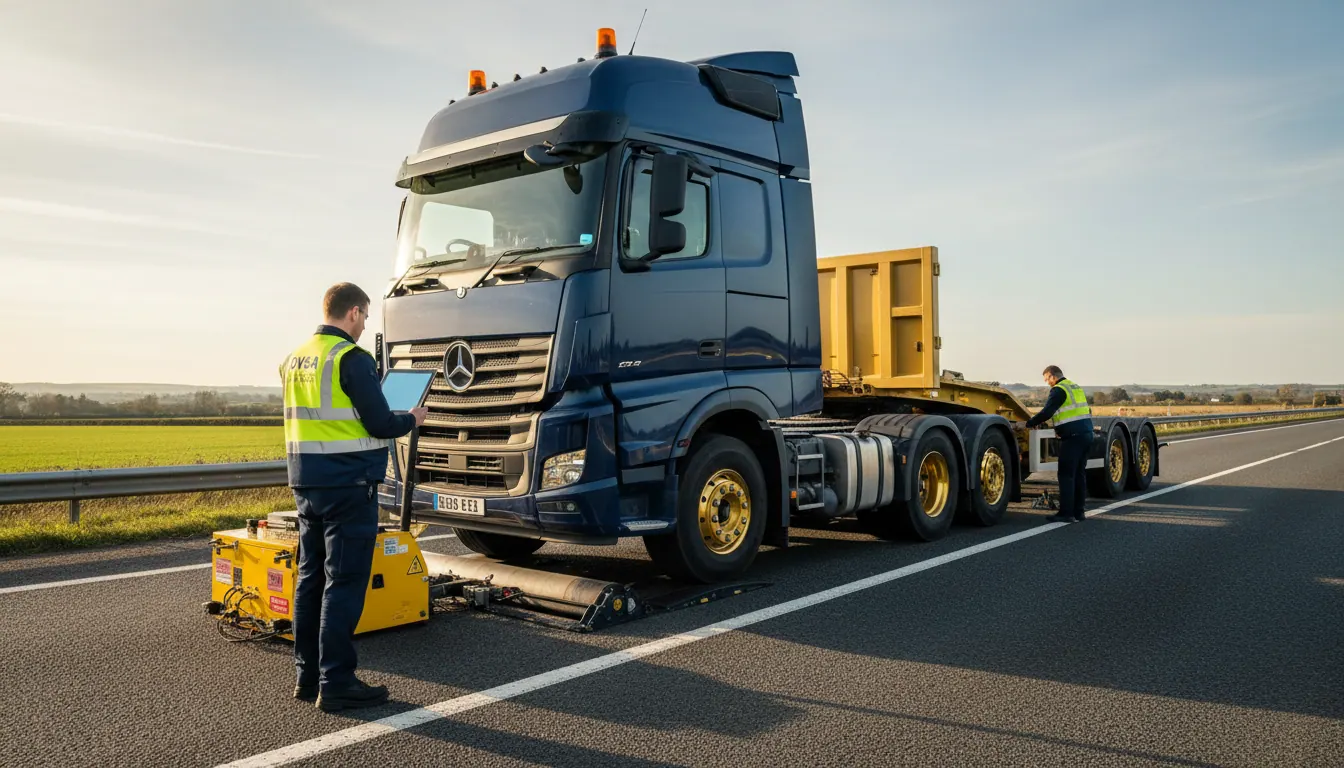
Brake failure is one of the most common reasons an HGV or trailer gets a prohibition notice at the roadside. DVSA enforcement officers carry portable brake-testing equipment, and if your vehicle cannot meet the required efficiency figures on the spot, it is not going anywhere. For operators running on the M1, A38, A50, A42 or A52, that means a loaded truck sitting on the hard shoulder or at a check site while your delivery window closes.
Getting brake testing right is not complicated, but it does require understanding what DVSA actually expects, how often you need to test, and what "weighted" or "laden" testing means in practice. Here is the practical picture.
What DVSA requires for HGV brake testing
DVSA sets out brake performance requirements under the Road Vehicles (Construction and Use) Regulations 1986, updated and clarified through guidance in the Guide to Maintaining Roadworthiness. Every HGV and trailer must achieve minimum brake efficiency figures to be considered roadworthy.
The key figures are:
- Service brake (foot brake): minimum 50% efficiency for most goods vehicles
- Secondary brake: minimum 25% efficiency
- Parking brake: minimum 16% efficiency on goods vehicles
These figures are checked using a roller brake tester (RBT) at a test station or during a DVSA check. A roller brake tester spins each wheel in turn and measures the braking force applied. The result is expressed as a percentage of the vehicle's gross weight.
This is where it gets operationally important. If your vehicle is tested unladen and the brakes are set up to perform at that weight, the efficiency figures may look fine on paper. Load the same vehicle to its operating weight and the picture can change entirely.
The laden brake test requirement: what changed in April 2025
From April 2025, DVSA updated its guidance on laden brake testing for goods vehicles and trailers. The core principle is that a brake test carried out at unladen weight does not always give a true picture of how brakes perform in real operating conditions.
Under the updated requirements, operators are expected to ensure brake testing is carried out at, or as close as practicable to, the vehicle's typical operating weight. For a tractor unit and curtainsider running at 44 tonnes on the M1, an unladen roller test on the tractive unit alone tells you very little about how the whole combination will stop at speed.
Practically, this means:
- Trailers should be tested as part of the combination where possible
- Where a laden test is not practicable, the reason should be documented
- PMI records should reflect the conditions under which the brake test was conducted
- Any significant imbalance between axles (typically more than 30% difference side to side) is a fail
If you are preparing vehicles for MOT or a DVSA inspection visit and your brake test records do not reflect realistic operating conditions, that is a gap an examiner will notice.
How often should an HGV have its brakes tested?
There is no single statutory interval that applies universally, but DVSA's Guide to Maintaining Roadworthiness is clear that brake testing should form part of every Preventative Maintenance Inspection (PMI). For most operators, that means every six to thirteen weeks depending on your maintenance schedule and what your operator licence conditions specify.
In practice, we recommend:
- Brake test at every PMI, recorded on the inspection sheet
- Additional brake checks after any brake component replacement (pads, shoes, chambers, slack adjusters)
- Roller brake test before any MOT presentation
- Brake check after any incident involving heavy braking or a collision
Trailers need the same attention as tractor units. A trailer that has been sitting in a yard for several weeks can develop sticking brakes, seized spring brakes or air leaks that will fail a roadside check instantly. If you are running trailers on the A50 or A38 corridor and they are not on a regular PMI cycle, you are carrying a compliance risk every time they leave the yard.
Roller brake testing vs. decelerometer testing
Most operators in East Midlands and South Yorkshire will encounter the roller brake tester as the standard method. The vehicle drives onto a set of rollers, each axle is tested in turn, and the machine produces a printout showing force per wheel and overall efficiency.
A decelerometer (or brake performance meter) can be used for road testing but is less commonly used for formal compliance checks. For PMI purposes and MOT preparation, a roller brake test with a printed result is what DVSA examiners want to see in your maintenance records.
The printout matters. Keep it. File it with the PMI record for that vehicle on that date. If DVSA visits your operating centre and asks to see brake test records, a folder of printouts is far more convincing than a note saying "brakes checked, satisfactory".
What a weighted brake test means for your trailer
A weighted brake test, sometimes called a laden brake test, means testing the brakes with the trailer loaded to a representative weight rather than empty. DVSA's concern is straightforward: automatic load-sensing valves (ALSVs) and electronically controlled braking systems (EBS) adjust brake pressure according to load. Testing an empty trailer does not verify that this system is working correctly under load.
For operators running curtainsiders, flats or box trailers on routes like the A52 or M1, this is particularly relevant. A faulty ALSV on an empty trailer might not show up on a roller test. The same trailer at 25 tonnes could have seriously compromised braking.
Our approach is to test trailers at working weight wherever possible. Where that is genuinely not practicable, we document it. That documentation protects you if questions are raised later.
For more on trailer roadworthiness and keeping your combination compliant between PMIs, our article on trailer curtain repair and welding: keeping box and flatbed trailers roadworthy on the A38 and M1 covers the structural side of trailer compliance in detail.
What we actually do at Trucktec Assist 24
We carry out brake testing as part of our PMI safety inspections and MOT preparation work at our workshop at Calk Mill Farm, Ashby Road, Melbourne, Derby, DE73 8BJ. The workshop runs Monday to Friday, 07:30 to 17:00 for planned work.
If a brake fault develops at the roadside, our 24/7 emergency line (answered every day of the year, including bank holidays) means a technician can attend with the right equipment. Where a roadside repair is possible, we do it there rather than towing. A brake chamber replacement or a seized slack adjuster is not always a reason to drag the vehicle back to a workshop.
"The guys here are brilliant very accommodating no job to big or small, they work fast and to a very high standard as in this business a vehicle of the road is lost money and they understand this. Highly recommend 👌"
That review from horizontravelgroup captures exactly what drives how we work. A truck off the road is money out of your pocket. We know that, and we work accordingly.
If you are planning your fleet's PMI schedule or need to understand what DVSA expects at an inspection, our PMI safety inspection checklist: what DVSA looks for and how to prepare your HGV or trailer is a good place to start.
Frequently asked questions
What are the DVSA brake test requirements for heavy vehicles?
DVSA requires goods vehicles to achieve a minimum service brake efficiency of 50%, secondary brake of 25% and parking brake of 16%. These are checked by roller brake tester at PMI and MOT. Results must be recorded and retained as part of your maintenance records. The Guide to Maintaining Roadworthiness (updated April 2025) sets out how and when tests should be conducted.
How often should an HGV have its brakes tested?
Brake testing should be carried out at every PMI, which for most operators means every six to thirteen weeks. Additional tests are needed after any brake component work. If your maintenance interval is set by your operator licence conditions, your brake test frequency should match that interval as a minimum.
Does an HGV trailer have to be brake tested before service?
Yes. Trailers are subject to the same brake performance requirements as tractor units and must be tested as part of their PMI cycle. DVSA expects trailers to be tested at or near operating weight where practicable, particularly to verify that load-sensing systems are functioning correctly.
What are the requirements for a weighted HGV brake test?
A weighted (laden) brake test requires the vehicle or trailer to be loaded to a representative operating weight before the roller brake test is conducted. This is required because load-sensing valves and EBS systems only function as designed under load. DVSA's April 2025 guidance reinforces that unladen-only testing is not sufficient for vehicles where load significantly affects braking performance. Where a laden test is not practicable, operators must document the reason.
Get your brake testing booked
If your PMI schedule is due or you want to make sure your combination is ready for a DVSA inspection, get in touch. Our workshop serves operators across East Midlands and South Yorkshire, with mobile attendance available on the M1, A38, A50, A42 and A52 corridors when faults develop at the roadside.
Call us on 01332 916028 to book brake testing, a PMI or MOT preparation. The line is answered 24 hours a day, 365 days a year.