Steering and suspension checks before DVSA inspection: what roadworthiness testers look for on HGVs and trailers
What DVSA inspectors check on HGV steering and suspension, how to prepare your fleet, and why local operators across East Midlands trust Trucktec Assist 24.
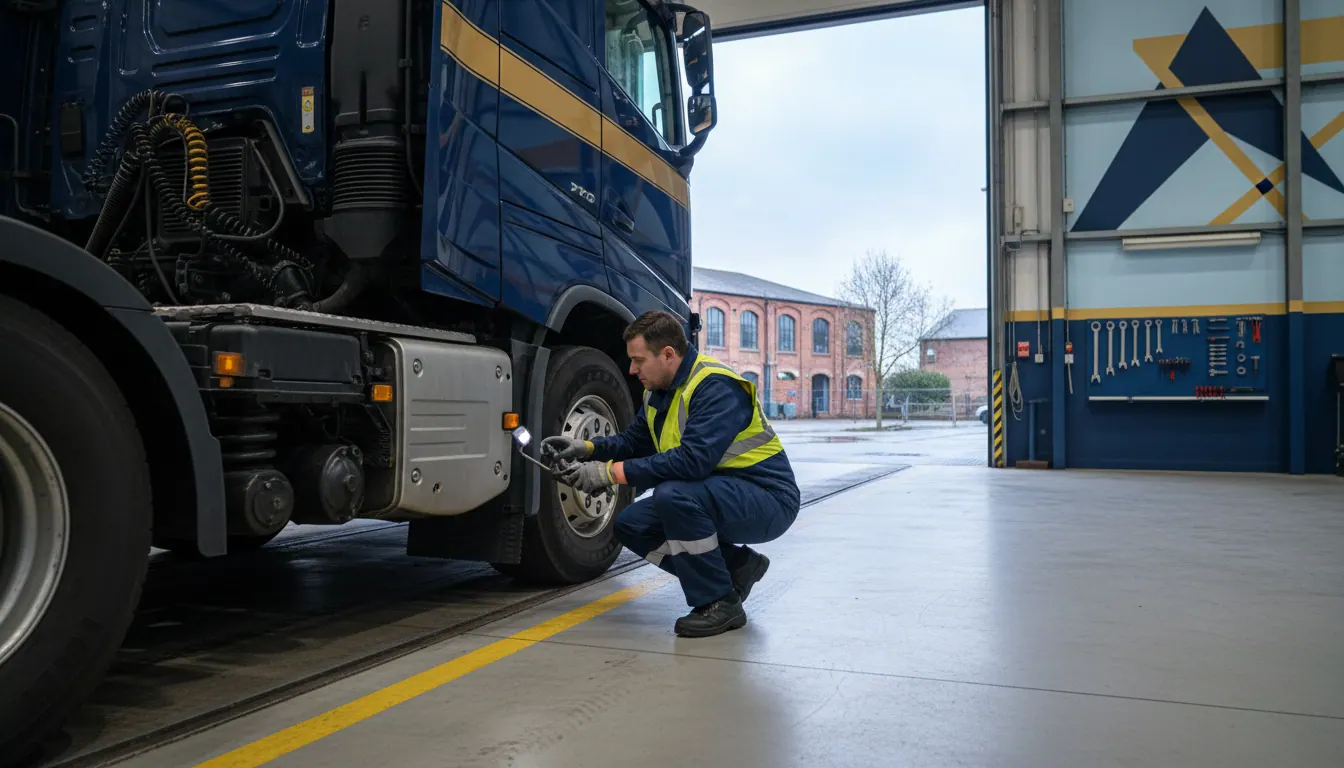
What DVSA actually looks for on steering and suspension
Every six-weekly safety inspection and every MOT test puts steering and suspension under the microscope. DVSA inspectors work to the HGV Inspection Manual, and the steering and suspension section is one of the most detailed in the whole document. Get it wrong and you are looking at an immediate prohibition, a damaged OCRS score and a vehicle off the road until the defect is rectified.
So what are they checking? In broad terms:
- Steering play and column movement. Excessive free play at the wheel, worn universal joints on the column, loose or cracked mounting brackets.
- Track rod ends and drag links. Worn ball joints, split or missing dust covers, insecure locking arrangements.
- Power steering integrity. Fluid leaks, hose condition, pump security, rack or box wear.
- Wheel bearings. Detectable play when the wheel is rocked at the twelve and six o'clock positions.
- Springs and spring hangers. Cracked or broken leaves, loose U-bolts, worn shackle pins, corroded or fractured hangers.
- Shock absorbers. Leaking seals, insecure mountings, evidence of bottoming out.
- Air suspension components. Damaged bellows, leaking valves, faulty height control, insecure mounting brackets.
- Stub axles and kingpins. Wear beyond manufacturer tolerance, missing or inadequate lubrication.
These are not tick-box items. A DVSA examiner will apply physical force to check for movement, use a wheel-play detector where appropriate and look under the vehicle with a torch. Preparation matters.
Why the 2026 HGV Inspection Manual update matters for your fleet
The updated HGV Inspection Manual (sometimes searched as HGV inspection manual 2026) tightened the guidance on how wear limits are assessed and clarified what constitutes a major or dangerous defect on steering and suspension items. If your workshop or your drivers are still working from an older checklist, there is a real risk of signing off an inspection sheet that would not satisfy a DVSA examiner today.
The key practical change is around documentation. Annex 4A of the manual provides the example safety inspection record for HGVs, and DVSA expects the inspection sheet to reflect the current standard. If you are using HGV 6-weekly inspection sheets that pre-date the current manual, it is worth reviewing them. An operator found to be using inadequate inspection records during a targeted enforcement stop or a traffic commissioner inquiry is exposed even if the vehicle itself is mechanically sound.
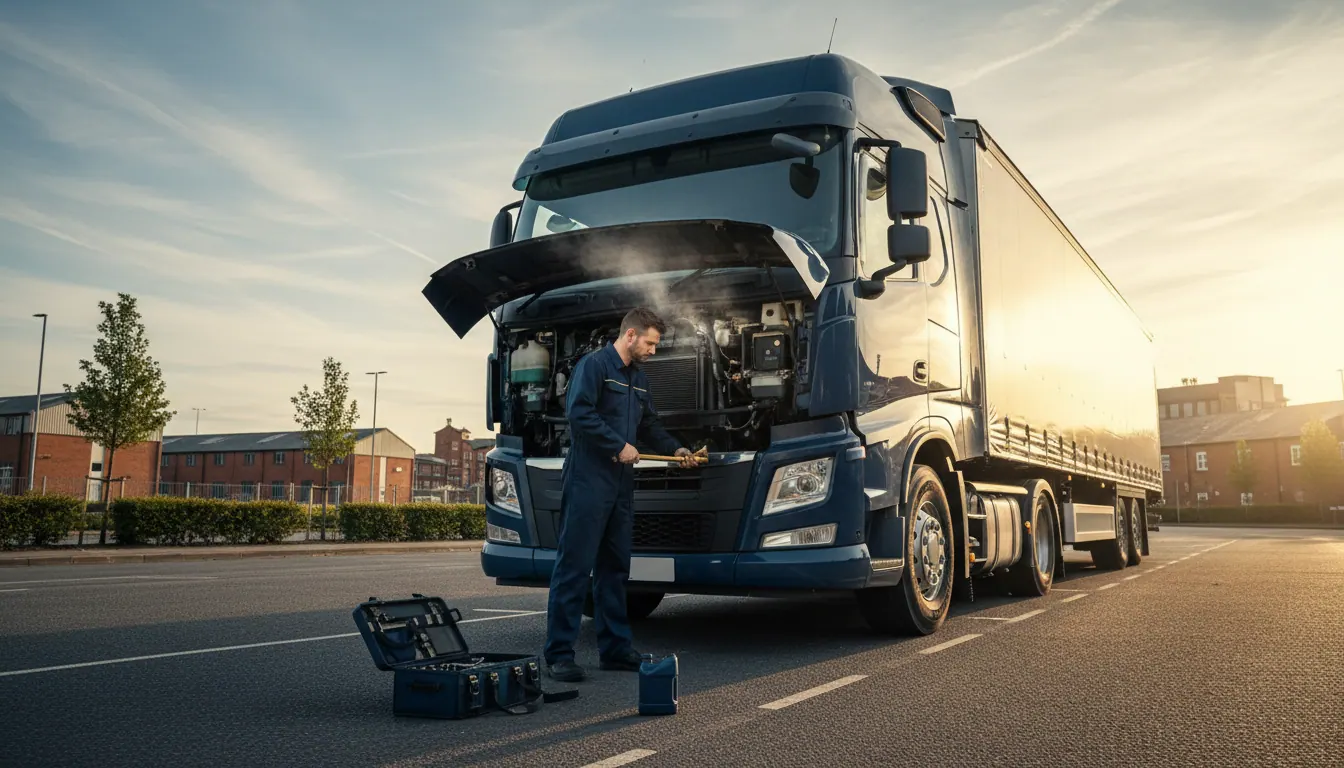
We keep up with these changes as part of the PMI safety inspections and planned preventative maintenance we carry out for fleets across the East Midlands and South Yorkshire. If you are unsure whether your current inspection regime reflects the latest DVSA guidance, get in touch and we can talk it through.
The defects that catch operators out most often
From the work we carry out on trucks, trailers and vans across routes including the M1, A38, A50, A42 and A52, a few steering and suspension faults come up repeatedly.
Worn kingpins on older tractor units. Kingpin wear is insidious. It develops gradually, drivers stop noticing the vagueness in the steering, and by the time it shows up on an inspection sheet it can already be a dangerous defect. Regular measurement during PMI checks catches this before it becomes a prohibition.
Cracked spring leaves on heavily loaded trailers. A crack in a spring leaf is not always obvious to a driver doing a walk-round check, particularly if it is not on the visible outer leaf. A proper inspection with the vehicle over a pit or on a ramp will find it. A roadside DVSA examiner will find it too.
Air suspension bellows on curtainsiders and box trailers. A small leak in a bellow can go unnoticed until the vehicle is running light and the height control starts behaving oddly. On a laden vehicle it can cause uneven load distribution and abnormal tyre wear. We see this regularly on trailers running the A50 corridor into the East Midlands distribution hubs.
Power steering leaks on DAF and Volvo tractor units. A weeping hose or a slowly dripping rack seal will not stop the vehicle immediately, but it will fail an MOT and it can result in a sudden loss of assistance if the fluid level drops far enough. It is the sort of defect that shows up at the six-weekly inspection if the inspector is thorough, and does not show up if they are not.
For more on how we approach MOT preparation and what typically fails, see our article on MOT preparation for HGVs: what fails and how to avoid downtime before your test date.
What a proper DVSA steering and suspension HGV inspection involves
A compliant six-weekly safety inspection is not a visual walk-round. For steering and suspension, it needs to include:
- A check of all steering joints and linkages for wear, security and condition of dust covers.
- Power steering fluid level and system integrity check.
- Wheel bearing check by rocking each steered wheel at twelve and six o'clock.
- Full spring and hanger inspection, including U-bolt torque check.
- Shock absorber assessment, including mounting security.
- Air suspension system check where fitted, including bellow condition and valve operation.
- Kingpin and stub axle wear measurement where applicable.
- Record of findings on a compliant HGV 6-weekly inspection sheet, signed by the inspector.
That last point is important. The inspection sheet is a legal document. It needs to show the inspector's identity, the date, the vehicle identity, the odometer reading and the outcome of each check. If a defect is noted, the sheet needs to record what action was taken and when.
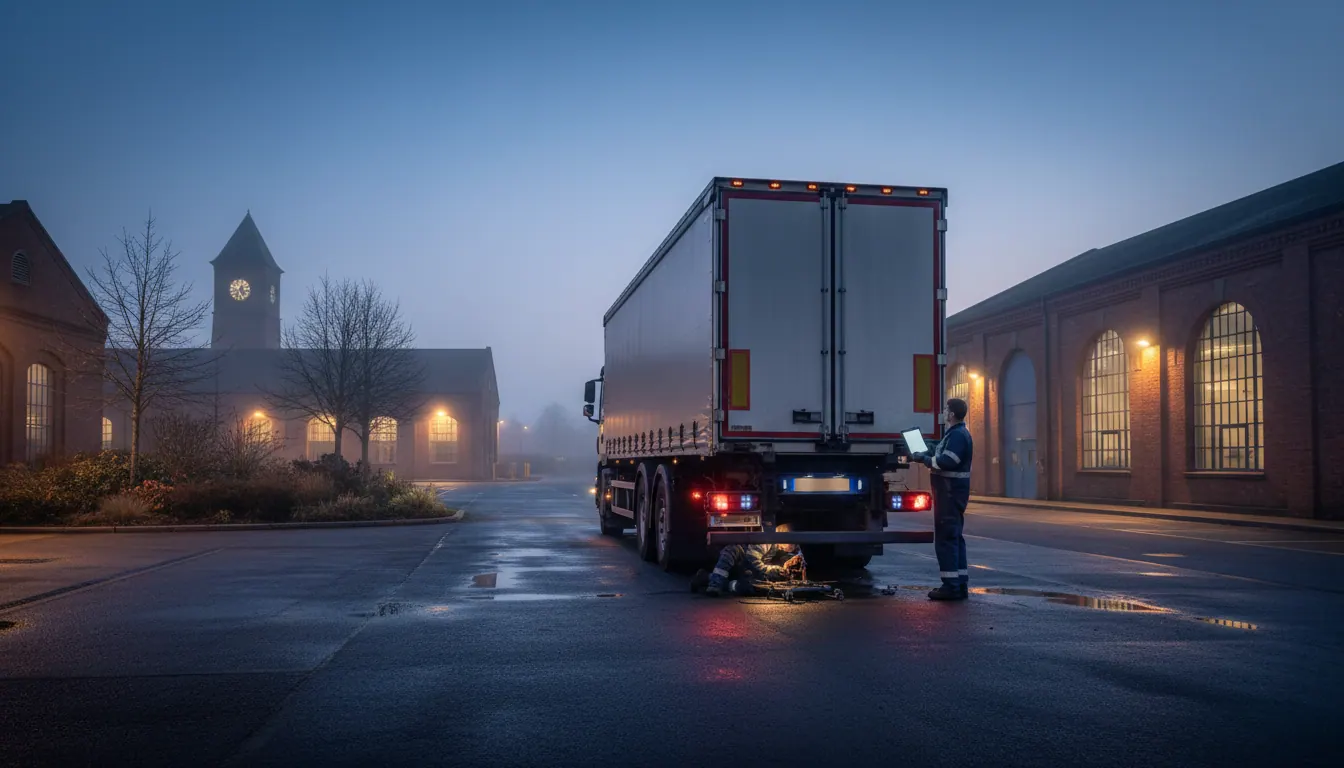
We carry out PMI safety inspections at our workshop at Calk Mill Farm, Ashby Road, Melbourne, Derby, DE73 8BJ, and we can also attend your yard for fleet inspections where that suits you better. Workshop hours for planned work are Monday to Friday, 07:30 to 17:00.
What one of our customers said
The team at Minibus Experts put it simply:
We use Trucktek for our maintenance, great bunch of guys with fountains of knowledge. Highly recommended.
That kind of trust matters when you are putting your operator licence on the line at every inspection. Getting steering and suspension right is not just about passing a test. It is about sending drivers out in vehicles that are genuinely safe, and being able to demonstrate that to DVSA if they ask.
Roadside breakdowns and steering or suspension failures
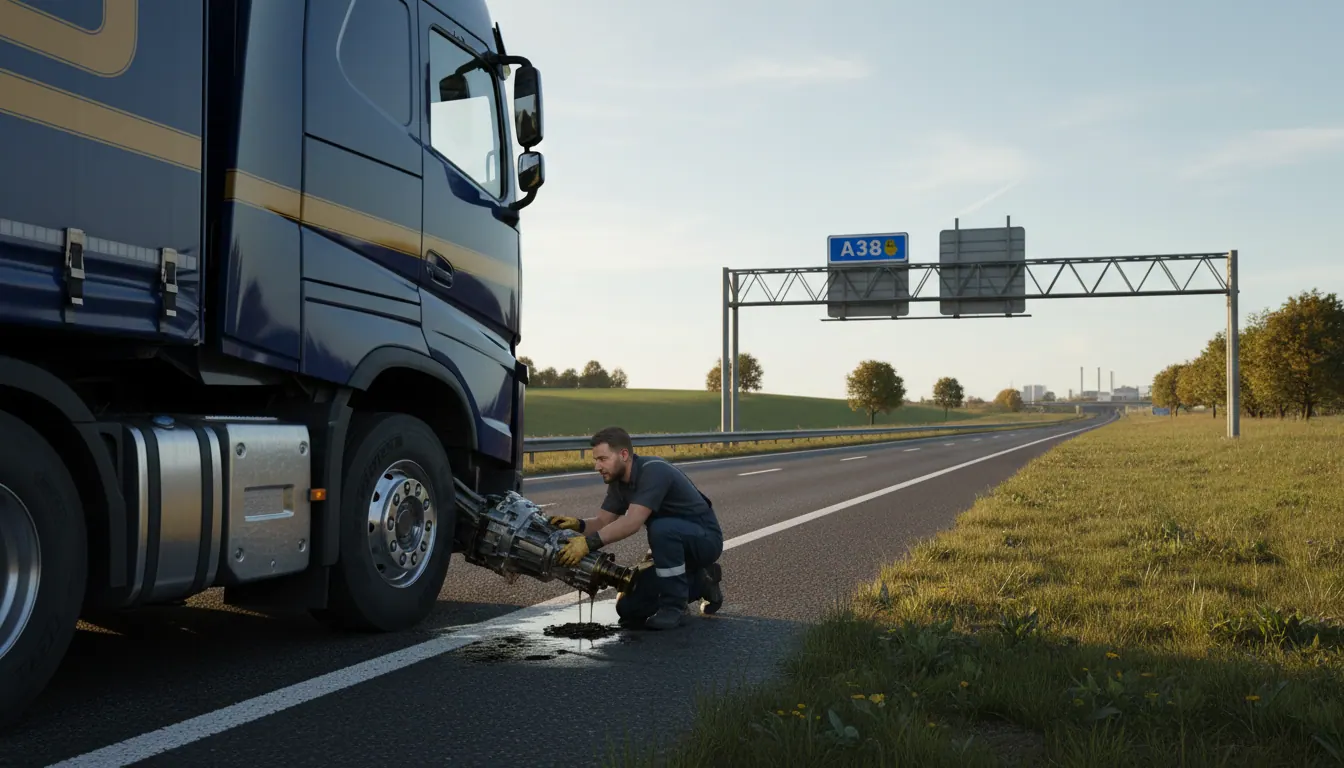
A steering or suspension failure on the M1 or A38 is not just a compliance problem. It is a safety emergency. A broken spring, a failed air suspension bellow or a seized wheel bearing can make a vehicle uncontrollable. When that happens, operators need a recovery and repair service that can attend quickly, diagnose at the roadside and either repair on the spot or recover safely.
Our emergency breakdown line is answered 24 hours a day, 365 days a year, on 01332 916028. Our technicians attend fully equipped and carry out roadside repairs wherever it is safe and practical to do so, rather than defaulting to a tow. That matters because a tow adds hours to your downtime and a repair bill you did not need.
For a detailed look at what happens after you call us following a roadside failure, see Same-day HGV and van recovery on Pride Park and the A52: what happens after you call Trucktec Assist 24.
Keeping your OCRS score clean
Every prohibition, every delayed defect and every inadequate inspection record feeds into your OCRS score. Transport managers running fleets across South Yorkshire and the East Midlands know that a poor OCRS invites targeted roadside checks, and that those checks find more prohibitions, which makes the score worse. It is a cycle that is hard to break once it starts.
A robust steering and suspension inspection regime, documented properly and carried out at the right intervals, is one of the most straightforward ways to keep your OCRS in the green. It is not complicated. It just needs to be done consistently, by someone who knows what they are looking for, and recorded in a way that satisfies DVSA.
If you want to understand how a fleet maintenance contract can support a consistent inspection regime, our article on planned preventative maintenance for HGV fleets: why scheduled checks beat emergency callouts on the A42 and M1 covers the practical side of that in detail.
Frequently asked questions
What does DVSA check on HGV steering during a roadside inspection? A DVSA examiner will check for excessive play at the steering wheel, worn or damaged track rod ends and drag links, leaking or poorly secured power steering components, and the condition of dust covers on all joints. They will also check wheel bearing play by rocking the steered wheels. Any defect that affects steering control directly is likely to result in an immediate prohibition.
How often do HGV steering and suspension components need to be inspected? DVSA expects a safety inspection at intervals not exceeding six weeks for most HGVs, and steering and suspension must be included in that inspection. Higher-mileage or older vehicles may need more frequent checks. The inspection must be recorded on a compliant HGV 6-weekly inspection sheet and retained as part of your maintenance records.
What is the HGV Inspection Manual and has it changed recently? The HGV Inspection Manual sets out the standards DVSA uses to assess vehicle condition. It has been updated, and operators and their inspectors should be working from the current version. The updated manual clarifies defect categories for steering and suspension items and sets out what documentation is required. If your inspection sheets or procedures have not been reviewed against the current manual, it is worth doing that now.
Can a steering or suspension defect fail an HGV MOT? Yes. Steering and suspension defects are among the most common reasons for MOT failure on HGVs. A dangerous defect in this category means the vehicle cannot leave the test station under its own power until it is repaired. Getting these items checked before your test date, as part of a pre-MOT inspection, is the straightforward way to avoid that situation.
Get in touch
If you need a PMI safety inspection, a pre-MOT check or have a vehicle with a steering or suspension concern anywhere across the East Midlands or South Yorkshire, call us on 01332 916028. Our emergency line runs around the clock, and our workshop team is available from 07:30 Monday to Friday for planned work. We quote each job individually once we understand what is needed, so give us a call and we will talk it through.
Ready when you are
Call us- Same-day HGV and van recovery on Pride Park and the A52: what happens after you call Trucktec Assist 24
- Planned preventative maintenance for HGV fleets: why scheduled checks beat emergency callouts on the A42 and M1
- MOT preparation for HGVs: what fails and how to avoid downtime before your test date