No-start and fuel contamination problems on HGVs: winter prep and roadside diagnostics for East Midlands fleets
HGV no-start fuel contamination winter guide for East Midlands fleets. Diagnose waxing, water ingress and air locks fast. Call us 24/7 on 01332 916028.

When your HGV won't start on a cold morning, fuel is often the culprit
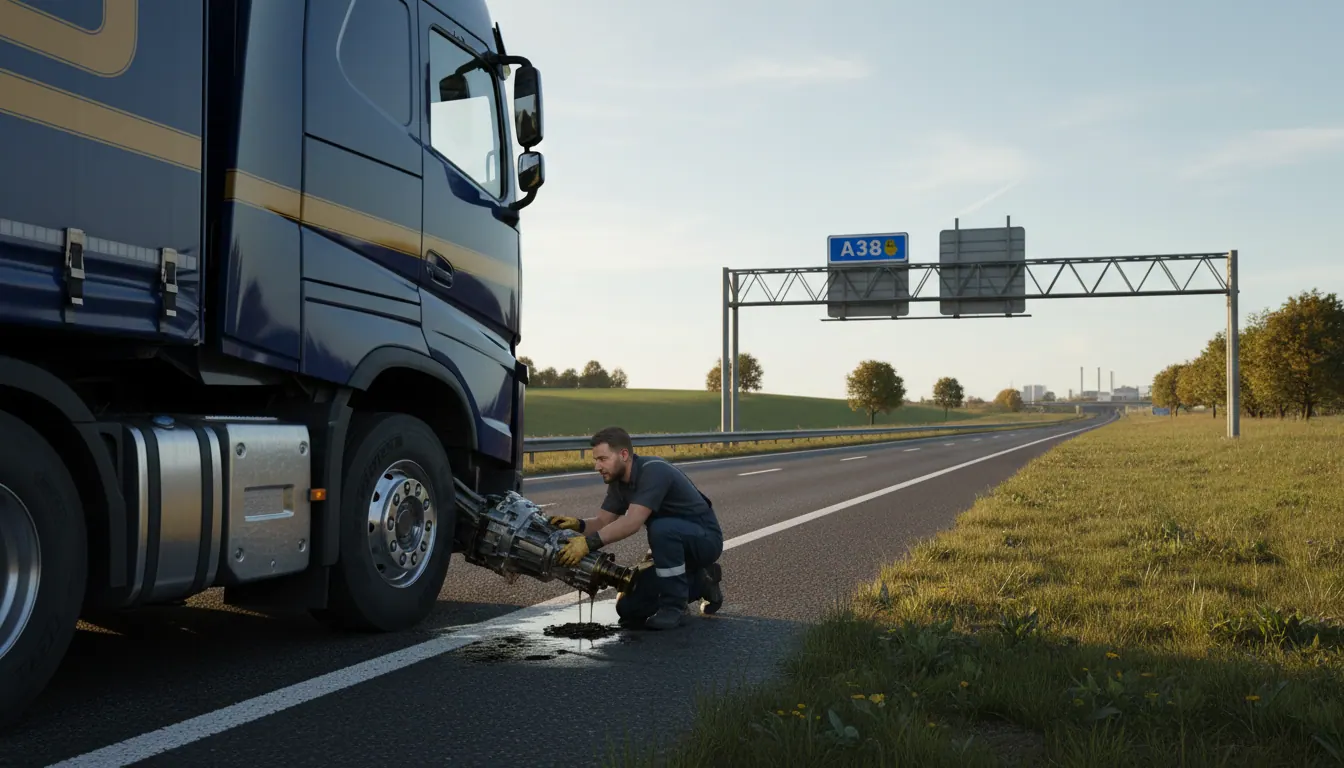
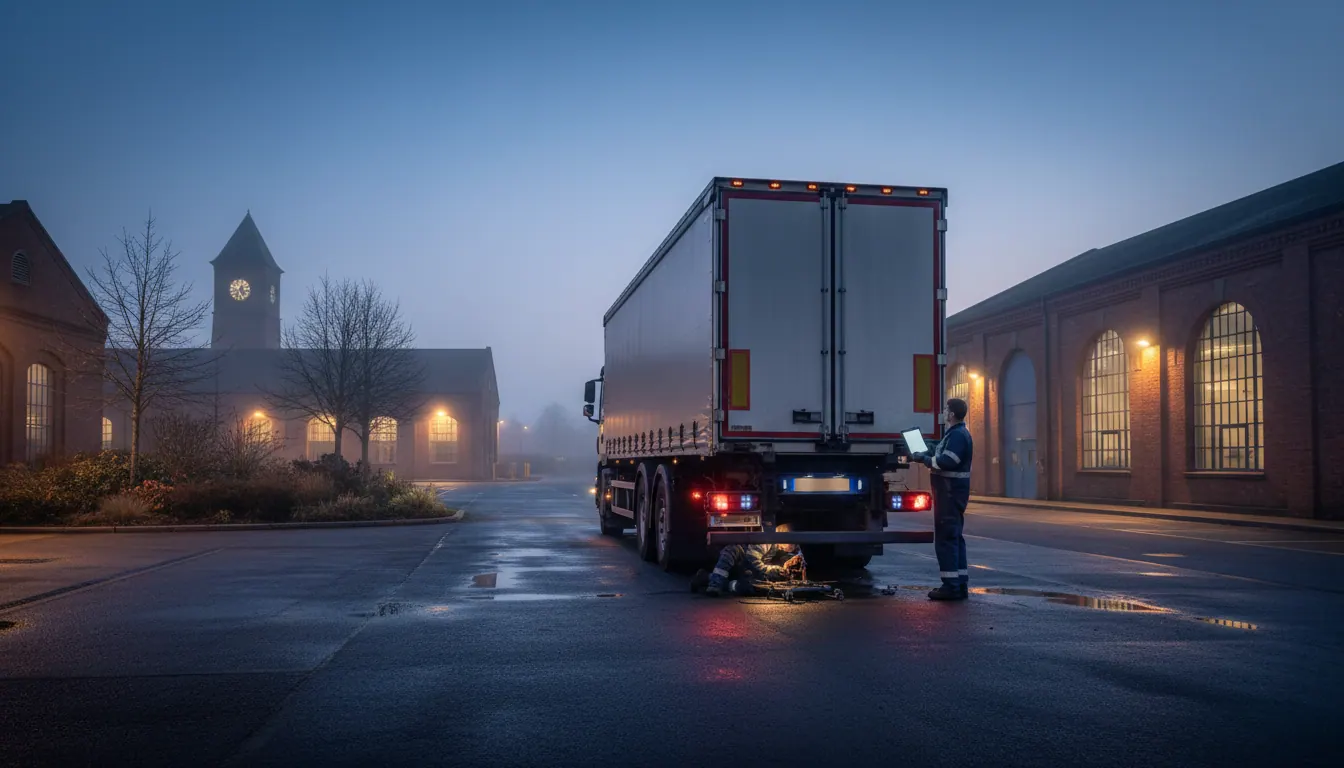
A driver turns the key at 05:30 on a January morning at a depot off the A52 or the A38, and the engine cranks but refuses to fire. No warning lights, no fault codes, no obvious reason. Nine times out of ten, the answer is in the fuel system, and winter makes it far worse.
This article walks through the main causes of HGV no-start fuel contamination in winter, what your drivers and transport managers can check at the roadside, and when to call us for a mobile repair rather than wait for a tow.
Why diesel fuel behaves differently in cold weather
Diesel is not a single substance. It contains paraffin waxes that stay dissolved at normal temperatures but begin to solidify when the mercury drops. Two temperatures matter here.
Cloud point is where the fuel turns hazy and wax crystals start to form. Cold filter plugging point (CFPP) is where those crystals are large enough to block the fuel filter completely. Standard summer-grade diesel sold at UK pumps can have a CFPP as high as -5°C. On a hard East Midlands frost, that is not a comfortable margin.
When the filter blocks, the engine cranks normally but gets no fuel. The starter motor sounds healthy. There are no fault codes. The driver assumes an electrical fault. It isn't.
UK fuel suppliers are supposed to switch to winter-grade diesel blends from mid-November, but supply chains are not instant. Early cold snaps in October or late frosts in March regularly catch fleets out, particularly if vehicles have been sitting overnight on exposed yards near the M1 corridor or on higher ground in South Yorkshire.
Water contamination: the other winter no-start trigger
Water in diesel is a year-round problem, but winter amplifies it in two ways.
First, condensation. Temperature cycling in a partially filled tank causes moisture to condense on the tank walls and drop into the fuel. Vehicles that sit overnight with low fuel levels are most vulnerable.
Second, contaminated deliveries. Fuel taken on from a poorly maintained forecourt or a bulk tank with a failing breather can introduce water directly. Even small amounts cause problems because water does not burn, it does not lubricate injectors, and at low temperatures it freezes inside fine fuel passages.
Signs of water contamination include:
- Engine cranks but will not start, or starts briefly then dies
- Rough running and misfiring after a cold start
- White or grey smoke at startup
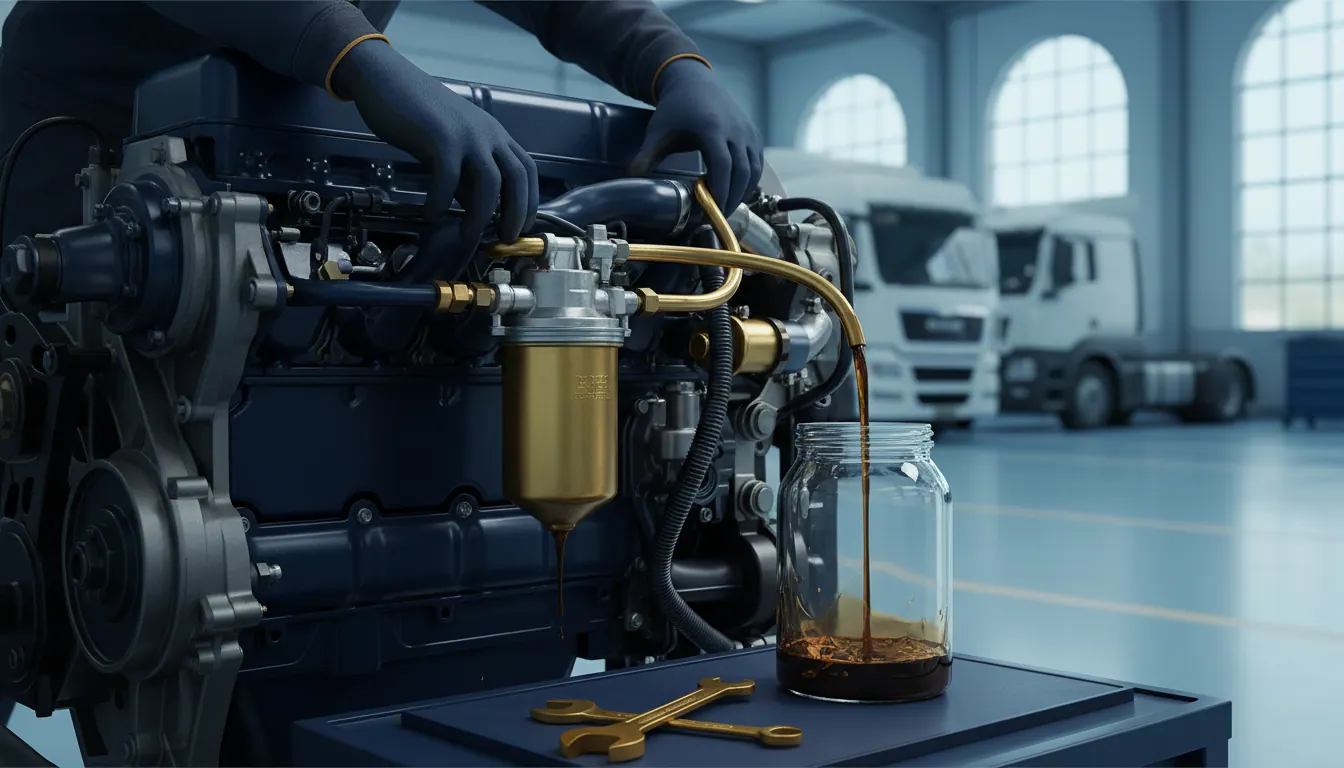
- Visible emulsification in a drained fuel filter (the fuel looks milky or has a grey sludge layer)
A water separator or fuel/water separator filter is fitted to most modern HGVs, but they have a finite capacity and need regular draining as part of PMI work. If yours is overdue, winter is when you will find out.
Air in the fuel system: the diagnosis drivers miss
An air lock in a diesel fuel system produces almost identical symptoms to waxed fuel: the engine cranks, there is no start, and no fault codes are thrown. Air enters the system through a cracked or perished fuel line, a loose filter housing, a failing lift pump, or a fuel tank that has run dry and then been refuelled.
Cold weather makes air locks harder to clear because the manual priming process takes longer when fuel is viscous. On some DAF, Volvo and MAN units, the self-priming cycle needs to run several times before the system builds enough pressure to fire.
If a vehicle has recently had a fuel filter change and then develops a no-start, air in the system is the first thing to check. Equally, if a driver has run a tank close to empty and the low-fuel warning has been ignored, an air lock is highly likely.
We carry the tooling to pressure-bleed fuel systems at the roadside, which is often all it takes to get a vehicle moving without a recovery tow.
Glow plugs, batteries and the cold-start chain
Fuel contamination and waxing get most of the blame in winter, but the cold-start electrical chain fails too, and it compounds the problem.
A diesel engine relies on compression heat to ignite fuel. Glow plugs preheat the combustion chamber to assist ignition when the engine is cold. A failed glow plug on one cylinder makes a cold start harder. Two or three failed glow plugs on a six-cylinder engine can make it nearly impossible, especially if the fuel is already marginal.
Batteries lose a significant portion of their cranking power in low temperatures. An ageing battery that passed its last check in September may not have enough grunt to spin the engine fast enough for compression ignition on a February morning. Slow cranking speed also means less compression heat, which means the fuel needs to be in even better condition to fire.
Before blaming the fuel on a cold no-start, check:
- Battery voltage under load (not just resting voltage)
- Glow plug operation and preheat time
- Starter motor draw
- Alternator output to confirm the battery is being properly charged on run
These checks are part of our mobile diagnostics kit. If a vehicle is cranking slowly and not starting, we can test the full cold-start chain at the roadside rather than guessing.
What operators near the M1, A38 and A50 actually do wrong
Honestly, the most common avoidable problems we see from fleets across the East Midlands and South Yorkshire come down to a few recurring habits.
Running fuel tanks low overnight. A half-empty tank condenses more moisture and gives wax crystals more room to accumulate. Keeping tanks at least two-thirds full in winter is simple and effective.
Skipping fuel filter drains on PMI. Water separator bowls need draining regularly. If your PMI schedule does not explicitly include this, it should. Our PMI safety inspection checklist covers exactly what gets checked and why it matters for DVSA compliance.
Ignoring additive treatment until after a problem occurs. Diesel anti-gel additives work by lowering the CFPP of the fuel. They need to be added before the fuel waxes, not after. Treating a bulk tank or a vehicle tank as part of a pre-winter checklist costs very little compared to a morning of failed starts and missed collections.
Neglecting battery and glow plug condition. These are not glamorous jobs, but a proper planned preventative maintenance programme catches failing components before they strand a vehicle at 05:30 on a dark January morning on the A42.
What happens when the vehicle is already stranded
If a vehicle is already down, the priority is diagnosis before recovery. Towing a vehicle with a waxed fuel filter wastes time and money if the fix is a filter change and a warm-up.
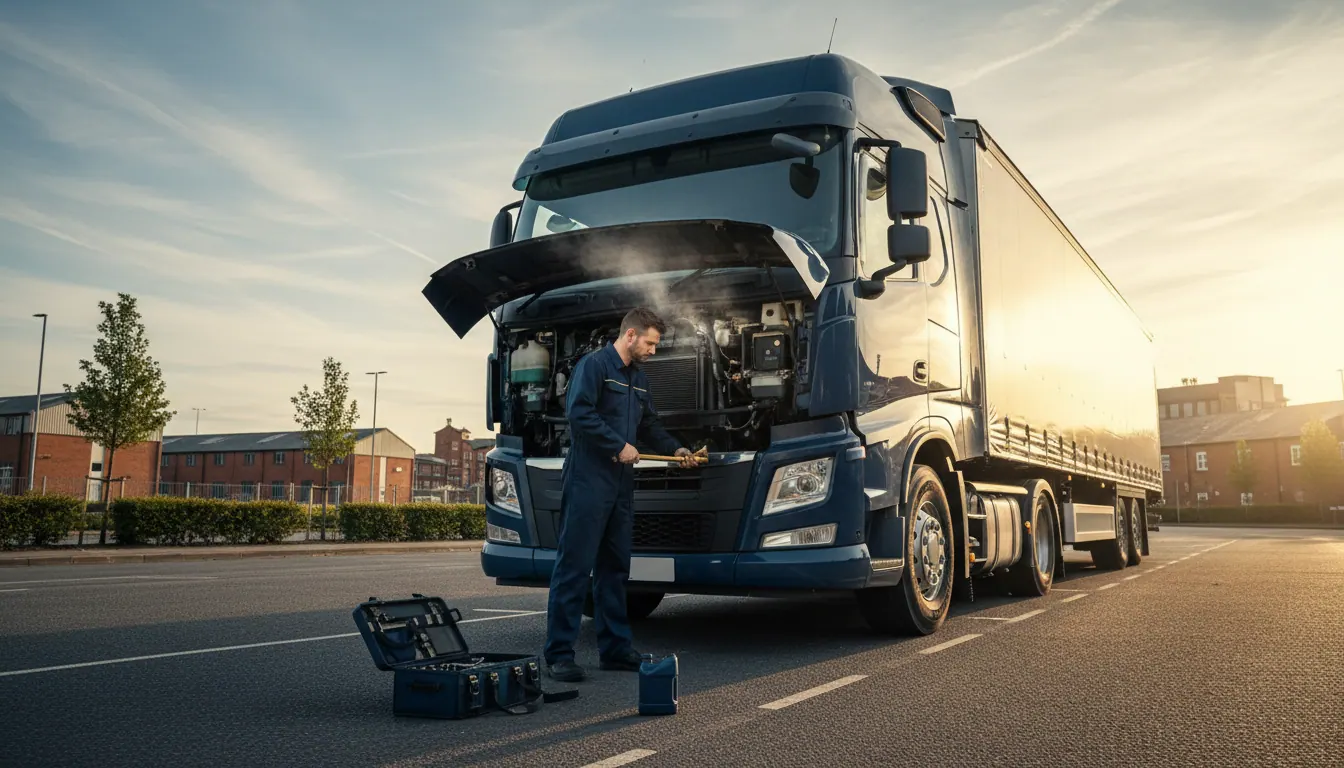
Our technicians attend fully equipped. We carry replacement fuel filters for common HGV makes, water separator elements, fuel system priming equipment, battery test gear and glow plug diagnostic tools. Where the repair can be done at the roadside, we do it there. That is the difference between a one-hour fix and a full recovery tow followed by a workshop queue.
Our breakdown line is answered 24 hours a day, 365 days a year on 01332 916028. If a vehicle is stranded on the M1 between junctions 25 and 29, on the A38 north of Derby, or anywhere across South Yorkshire, call us and we will get a technician moving.
One of our customers put it well:
"The guys here are brilliant very accommodating no job to big or small, they work fast and to a very high standard as in this business a vehicle of the road is lost money and they understand this."
horizontravelgroup
That is exactly the point. A vehicle off the road costs money every hour it sits. We know that, and it shapes how we respond.
Frequently asked questions
Why is my HGV not starting in cold weather even though it cranks fine? If the engine cranks normally but will not fire, the most likely causes in winter are a waxed or blocked fuel filter, water contamination in the fuel system, an air lock, or failed glow plugs. No fault codes are common with all of these. A proper roadside diagnosis will identify which one you are dealing with rather than guessing.
How cold is too cold for a diesel HGV to start on standard summer fuel? Standard summer-grade diesel can begin to wax and block filters at around -5°C. On a hard frost in Derbyshire or South Yorkshire, that threshold is easily reached, particularly for vehicles parked outside overnight. Winter-grade fuel has a lower cold filter plugging point, but the switchover at pumps is not always timed to match the first cold snap.
What can I put in diesel fuel to prevent winter starting problems? Diesel anti-gel or winter fuel additives lower the cold filter plugging point of the fuel in the tank. They need to be added before the fuel waxes, not after. Some operators treat their bulk storage tanks at the start of November as a matter of routine. If the fuel has already waxed, the filter needs to be changed and the system warmed before an additive will help.
What does "cranks but won't start, no codes" usually mean on an HGV diesel? No fault codes with a crank no-start almost always points to a fuelling issue rather than an electronic one. Air in the system, a blocked filter, water contamination or low fuel pressure from a failing lift pump are the most common causes. Cold weather makes all of them more likely and harder to clear without the right equipment.
Get help when you need it
If you have a vehicle down this winter across the East Midlands or South Yorkshire, call us any time on 01332 916028. Our workshop at Calk Mill Farm, Ashby Road, Melbourne, Derby, DE73 8BJ handles planned maintenance Monday to Friday, 07:30 to 17:00, but the breakdown line never closes. We would rather get you moving at the roadside than drag you into a workshop queue.