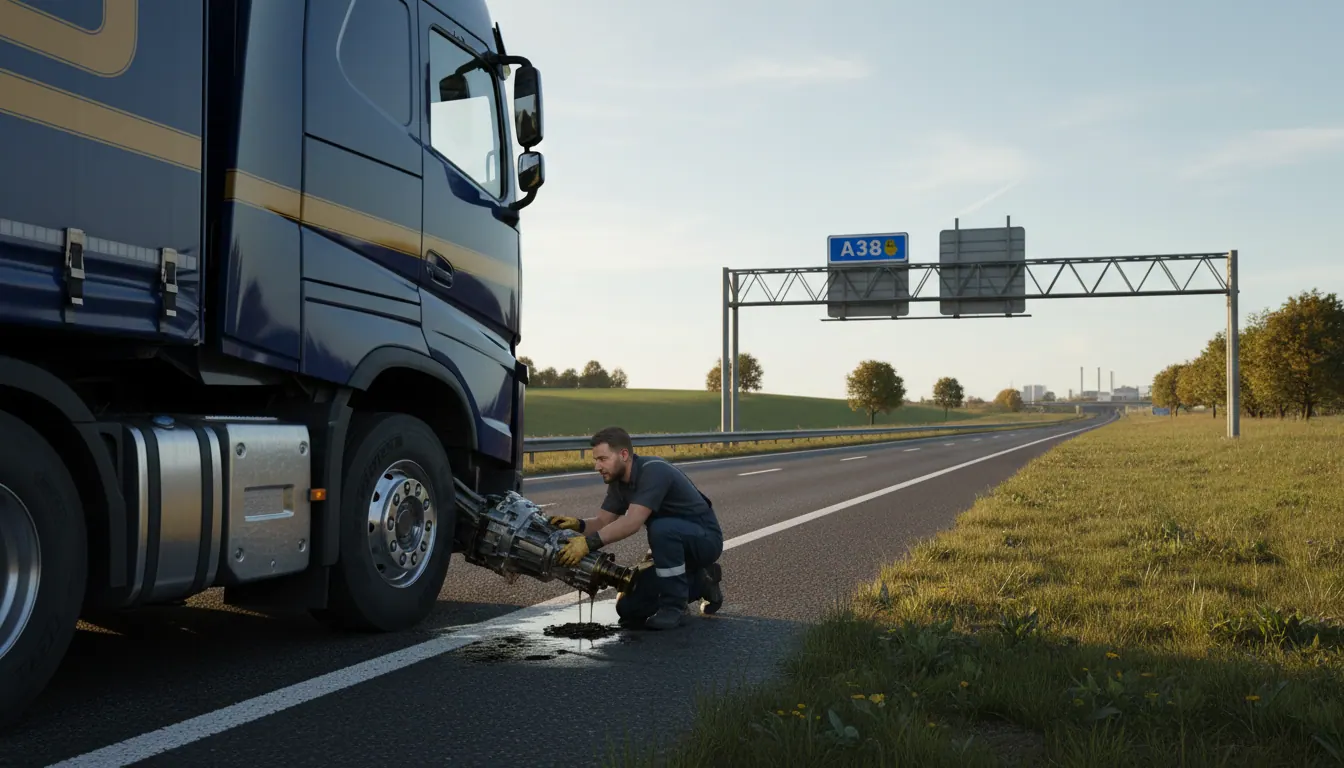
Cab heater and defrost failures on HGVs: winter safety and DVSA visibility checks for East Midlands fleets
HGV heater and defrost failures risk DVSA prohibition notices. We explain the rules, common faults and how we fix them across the East Midlands and South Yorkshire.


What DVSA says about heater and defrost systems on HGVs
A failed cab heater or a defrost system that cannot clear your windscreen is not just uncomfortable. Under the DVSA HGV inspection manual, a vehicle with seriously impaired forward visibility can be issued an immediate prohibition notice and taken off the road. If an examiner finds your windscreen is misted, iced or obscured because your demist system is not working, that is a dangerous defect. The driver cannot legally continue, and the operator's OCRS score takes a hit.
The relevant standard sits within the DVSA Guide to Maintaining Roadworthiness. It requires that windscreen demisting and defrosting equipment must be in good working order and capable of keeping the windscreen clear enough for the driver to see the road ahead. That applies year-round, but in practice it is the East Midlands winter, running from November through to March, that exposes faults operators did not know they had.
Why heater and defrost systems fail on HGVs in winter
Most of the heater and defrost failures we attend across the M1, A38, A50 and A42 corridors follow a predictable pattern. The system works well enough in summer, or sits dormant for months, then fails the moment the temperature drops and the driver actually needs it.
Common causes include:
- Coolant-fed heater matrix leaks or blockages. The matrix is the small radiator inside the cab that warm coolant passes through. If it blocks, corrodes or leaks, you get no heat and no demist. You may also get a sweet smell in the cab or misted side windows, which is coolant vapour.
- Blower motor failure. No airflow means no demist, even if the matrix is fine. Blower resistors are a frequent culprit, causing the fan to work on one speed only or not at all.
- Thermostat stuck open. If the thermostat fails open, the engine never reaches operating temperature. The cab stays cold, the heater never warms up, and the windscreen fogs constantly. This is also a sign of a wider coolant system issue worth investigating before it becomes an overheating problem in summer. We have a detailed guide on coolant system faults on HGVs and trailers if you want more on that.
- Auxiliary diesel heater faults. Many modern HGVs and coaches run a diesel-fired parking heater (Webasto, Eberspächer and similar units). These are brilliant when they work, but they have their own fuel lines, glow plugs, control units and sensors. Cold starts after a long lay-off, water ingress and blocked fuel filters are all common failure modes.
- Electrical faults. Blown fuses, corroded connectors and failed control units can kill the heater system completely. These are sometimes straightforward to fix at the roadside and sometimes need workshop diagnostics. We cover the broader picture of cab and cargo area electrical faults on HGVs in a separate article.
- Blocked cabin air filters. Easily overlooked. A choked filter starves the blower and reduces demist performance significantly.
None of these faults announce themselves with a dramatic warning light. The driver usually notices a gradual loss of heat over a few days, then one cold morning the windscreen will not clear. By then, the vehicle is already a roadworthiness risk.
The DVSA visibility standard: what examiners actually check
During a roadside check or a PMI safety inspection, examiners assess whether the demisting system can clear the windscreen to a standard that gives the driver adequate forward visibility. They are not just looking at whether the fan turns on. They check whether the airflow is sufficient, whether the system is actually clearing glass, and whether any part of the system is visibly damaged or inoperative.
A defect that prevents adequate demisting is categorised as dangerous under the DVSA inspection criteria. That means an immediate prohibition, not an advisory. The vehicle does not move until the fault is rectified and a re-examination is passed.
For operators on the East Midlands road network, this is a real risk. A roadside check on the A38 near Derby, on the M1 between junctions 25 and 29, or on the A50 heading towards Stoke can happen at any time. DVSA target high-mileage corridors, and the routes through our patch are busy freight routes year-round. Getting caught with a defective heater system in January is an avoidable problem.
What our technicians do at the roadside
When we attend a breakdown or a reported heater fault, our technicians carry diagnostic equipment and a working stock of common parts. The aim is always to repair at the roadside rather than tow. That matters because towing a loaded trailer off the A50 or the M1 takes time and costs you a delivery.
The first step is diagnosis. We check coolant level and condition, test the blower motor and resistor pack, scan for fault codes on the heater control unit, and inspect the auxiliary heater if fitted. On many jobs, the fault is clear within a few minutes.
Common roadside repairs we carry out include:
- Blower motor and resistor replacement
- Thermostat replacement
- Topping up and pressure-testing the coolant system
- Auxiliary heater fault diagnosis and component replacement
- Fuse and relay checks and replacement
- Cabin filter replacement
Heater matrix replacement is more involved. Depending on the vehicle, it may require partial dash removal, which is a workshop job. If that is what is needed, we will tell you honestly, and we can arrange recovery to our workshop at Calk Mill Farm, Ashby Road, Melbourne, Derby, DE73 8BJ, where the work can be completed with the vehicle off the road for the minimum time possible.
What horizontravelgroup said
The team at horizontravelgroup, who operate coaches and run vehicles commercially across our patch, put it plainly:
The guys here are brilliant very accommodating no job to big or small, they work fast and to a very high standard as in this business a vehicle of the road is lost money and they understand this.
Highly recommend 👌
That is exactly the point. A coach with no cab heat and a fogged windscreen in January is not just a DVSA problem. It is a vehicle off the road, a job not done, and a customer let down. We understand that, because we work with operators for whom downtime has a direct cost.
Preventing heater and defrost failures before winter
The most effective thing a fleet operator can do is include heater and defrost system checks in the pre-winter PMI cycle. This is not a complex inspection, but it is one that gets skipped when technicians are focused on brakes, tyres and lights.
A pre-winter check should cover:
- Coolant level, condition and freeze-point (antifreeze concentration should protect to at least minus 25 degrees Celsius for UK winters)
- Thermostat function (confirmed by checking the engine reaches normal operating temperature)
- Blower motor operation on all speeds
- Cabin air filter condition
- Auxiliary heater: test run, fuel filter check, glow plug condition if accessible
- Windscreen washer fluid: use a proper screen wash rated for low temperatures, not diluted summer fluid
If you are running a fleet of HGVs, coaches or minibuses out of depots across the East Midlands or South Yorkshire, we can carry out these checks as part of a planned maintenance visit. That means our technician comes to your yard, works through the fleet systematically, and flags anything that needs attention before the cold weather arrives. For more on how planned maintenance prevents emergency callouts, see our article on planned preventative maintenance for HGV fleets.
Frequently asked questions
Can a DVSA examiner prohibit my HGV for a faulty heater? Yes. If the defrost system cannot maintain adequate forward visibility, the defect is classified as dangerous under the DVSA HGV inspection manual. That means an immediate prohibition notice. The vehicle cannot move until the fault is repaired and inspected.
My cab heater blows cold air but the engine temperature is normal. What is causing it? The most likely causes are a blocked or leaking heater matrix, a faulty blend door or actuator, or a failed blower resistor. A blocked matrix is common on higher-mileage vehicles where the coolant has not been changed regularly and deposits have built up. Diagnosis takes around 20 to 30 minutes for an experienced technician.
Does a faulty parking heater (Webasto or Eberspächer) count as a DVSA defect? If the vehicle relies on the parking heater as its primary demist source and it fails, then yes, it can contribute to a visibility defect. However, most HGVs have both a coolant heater and a parking heater. If the coolant heater is working and the screen can be cleared adequately, the parking heater fault alone is unlikely to trigger a prohibition, though it should still be repaired.
We run coaches and minibuses as well as HGVs. Do the same DVSA visibility rules apply? Yes. The requirement for adequate demisting and defrosting equipment applies to all large vehicles subject to DVSA roadworthiness inspections, including coaches and minibuses. If you operate a mixed fleet, all vehicles need to meet the same standard.
Get in touch before the cold weather catches you out
A heater or defrost fault is one of the easiest winter problems to prevent and one of the most disruptive to deal with at the roadside in January. If you want us to check your fleet before the cold weather arrives, or if you have a vehicle down right now, call us on 01332 916028. Our breakdown line is answered 24 hours a day, 365 days a year, and our workshop team is available Monday to Friday from 07:30 to 17:00 for planned work.
“Pulled in by a wrecker with a knackered clutch on my daf about 1130. The lads were on the job as soon as the part came in and had in finished and back on the road by 1715. Cracking job only wish you could give more than 5* Thanks Nick, Kaleb and Ben for getting me sorted and back on the road the sam…”
Ready when you are
Call us- Coolant system faults on HGVs and trailers: overheating diagnosis, summer checks and roadside repair options
- Planned preventative maintenance for HGV fleets: why scheduled checks beat emergency callouts on the A42 and M1
- Cab and cargo area electrical faults on HGVs: diagnosing warning lights and preventing mid-route failures